The 3.1 Gigawatt Ghost: Why AI Data Centers are the New Threat to Grid Stability
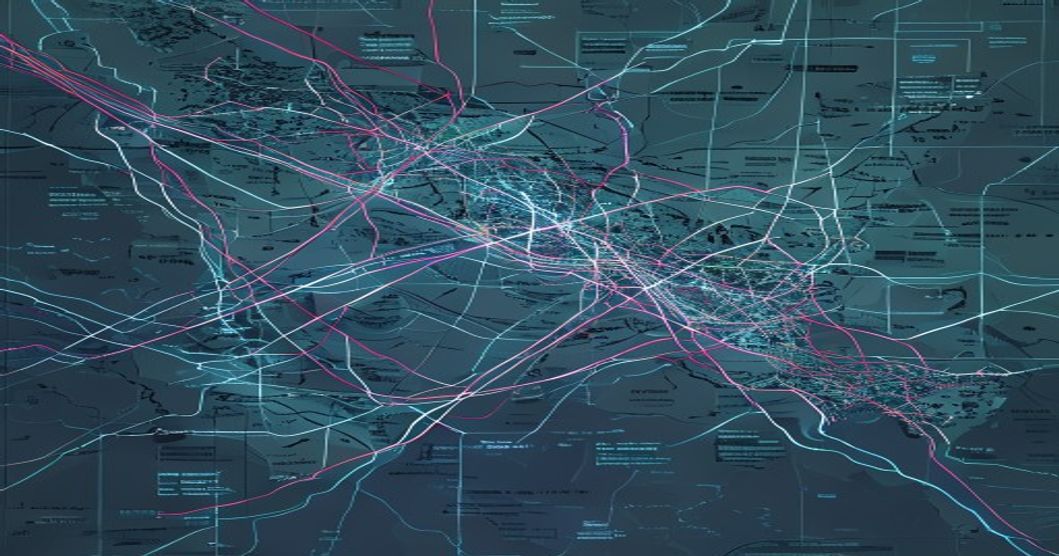

In the early hours of a humid summer morning in Northern Virginia, a single 230kV transmission line failed. In any other decade, this would have been a routine localized outage, corrected by automated relays within milliseconds. But in the heart of “Data Center Alley,” this routine failure triggered a phenomenon that grid operators now refer to as the “3.1 Gigawatt Ghost.”
Within seconds of the line failure, the voltage in the surrounding PJM Interconnection region dipped. Sensing this instability, the power electronics in hundreds of nearby data centers did exactly what they were programmed to do: they protected the servers. High-speed static transfer switches and Uninterruptible Power Supply (UPS) systems detected the sag and instantly disconnected the facilities from the utility grid, switching to on-site battery reserves and diesel generators.
From the perspective of the data center, the system worked perfectly. The servers never saw a flicker. But from the perspective of the PJM grid, 3.1 gigawatts of demand—equivalent to the output of three large nuclear reactors—suddenly vanished. This massive, instantaneous load drop caused a violent voltage “swell” that rippled across the Eastern Interconnection, triggering alarms as far away as Illinois. It was a stark demonstration of a new reality: the massive, concentrated power demand of AI data centers has turned them into a systemic risk to grid stability.
The Physics of the Spike: Voltage Sags, Swells, and Inertia
To understand why a 3.1 GW load drop is dangerous, we have to look at the fundamental physics of the electrical grid. The grid is a massive, synchronized machine that must maintain a precise balance between power generation and power consumption.
The Frequency-Load Relationship
Grid frequency (60Hz in North America) is the pulse of this machine. When demand exceeds supply, the frequency drops; when supply exceeds demand, the frequency rises. Usually, these fluctuations are minor and managed by the “rotational inertia” of massive spinning turbines in coal, gas, and nuclear plants. These turbines act like flywheels, resisting changes in speed and giving grid operators time to adjust generation.
However, when 3.1 GW of load is “shed” instantaneously, the generators suddenly find themselves with nowhere to send their energy. The excess energy causes the generators to speed up, spiking the frequency. Simultaneously, the sudden reduction in current flow leads to a voltage swell—a spike in electrical pressure that can damage equipment across the network.
The Inverter Gap
The problem is exacerbated by the modern transition to renewable energy. Solar and wind provide power through inverters, which lack the physical rotational inertia of traditional turbines. As AI data centers grow to represent a larger share of the load, and renewables represent a larger share of the generation, the grid loses its natural shock absorbers.
| Feature | Traditional Industrial Load | AI Data Center Load |
|---|---|---|
| Response to Voltage Sag | Gradually slows down or stalls (motor-based) | Instantaneous disconnection (Binary Failover) |
| Load Profile | Predictive, shift-based | Pulsed (AI training cycles) |
| Inertia Contribution | High (large motors) | Zero (Inverter-based) |
| Grid Interaction | Passive consumer | Active, high-speed switching |
In the Virginia incident, the “Binary Failover” behavior of the data centers—the hard switch from grid to battery—turned a minor disturbance into a regional event. Unlike a factory where motors might gradually slow down during a sag, a data center’s power delivery unit (PDU) is designed for “all or nothing” reliability.
The AI Concentration Problem: Density vs. Stability
The shift from general-purpose cloud computing to AI-specific workloads has fundamentally changed the electrical footprint of the data center. Traditional enterprise racks typically draw between 5kW and 15kW. In contrast, clusters utilizing NVIDIA H100 or the newer Blackwell B200 architectures are pushing rack densities to 100kW and beyond.
Pulsed Loads and Training Cycles
AI is not a steady-state load. Large Language Model (LLM) training involves massive synchronization steps. Thousands of GPUs process data in parallel and then pause to communicate gradients and update weights. This creates “pulse loads”—rapid swings in power consumption that occur hundreds of times per hour.
When these high-density clusters are concentrated in a single geographic area, like Loudoun County, Virginia, their synchronized behavior can act like a giant hammer hitting the grid. If a training job across 50,000 GPUs starts or stops simultaneously, the resulting ramp rate can exceed the ability of local substations to regulate voltage.
This concentration is partly driven by the AI deflationary spiral in IT outsourcing, where the rush to automate services has led to a centralized “arms race” for compute capacity. The result is a paradox: while we are seeing a tech industry move towards efficient AI architectures at the software level, the physical infrastructure is becoming more dense and potentially more volatile.
Technical Solutions: Beyond the Traditional UPS
The industry is beginning to realize that the “fortress” mentality of data center design—where the facility is an island that protects itself at the expense of the grid—is no longer sustainable. We are seeing a shift toward “Grid-Interactive” infrastructure.
Grid-Interactive UPS
A traditional UPS is a passive gatekeeper. A grid-interactive UPS, however, uses bi-directional power electronics. Instead of simply disconnecting during a sag, it can use its stored battery energy to “inject” power back into the facility’s internal bus, maintaining the load without disconnecting from the grid. This effectively masks the data center’s demand from the grid’s perspective during a transient event, preventing the “3.1 GW Ghost” effect.
Battery Energy Storage Systems (BESS) as a Buffer
Large-scale BESS installations are moving from being emergency backups to active grid assets. By using lithium-ion or zinc-alkaline battery arrays, data centers can perform “Fast Frequency Response” (FFR).
“The goal is to transform the data center from a volatile load into a stabilizing element. By utilizing BESS, we can absorb excess grid energy during a frequency spike and discharge it during a sag, acting as a digital shock absorber.” — Senior Power Systems Engineer, Mantbyte Research
IoT and Predictive Load Management
Modern facilities are deploying IoT sensor networks at the chip and rack level to predict power swings. If the system knows an AI training checkpoint is about to occur, it can signal the BESS to prepare for a ramp-down or ramp-up, smoothing the transition so the utility providers see a gradual slope rather than a vertical cliff.
The ‘Ride-Through’ Mandate: Lessons from ERCOT
Regulators are taking notice. ERCOT (the Electric Reliability Council of Texas) has been a pioneer in this space, largely because the Texas grid is an “island” with limited connections to the rest of the US, making it highly sensitive to load swings.
What is ‘Ride-Through’?
“Ride-through” capability refers to the ability of a power system to remain connected and operational during a voltage or frequency disturbance. ERCOT has begun implementing requirements that large-scale loads, including data centers, must be able to “ride through” voltage dips down to a certain percentage of nominal voltage for a specific duration (e.g., 0.2 seconds at 0% voltage).
This is a massive shift for data center architects. It requires moving away from hypersensitive static switches and toward power electronics that can tolerate “dirty” power for short bursts, relying on the DC-link capacitors within the server power supplies to bridge the gap before the UPS fully takes over.
Comparing PJM and ERCOT
While ERCOT has been aggressive with mandates, PJM is currently in a phase of “evolving standards.” PJM is projecting that data centers will account for 25% of its total load by 2040. In response, they are exploring “Dynamic Load Management” programs where data centers are paid to stay connected during disturbances or to gradually shed non-critical loads (like cooling or non-AI tasks) rather than performing a binary failover.
Implementation Strategy: Building a Grid-Aware Data Center
For engineers and architects, building the next generation of AI facilities requires a departure from the “N+1” redundancy playbooks of the past. The focus is shifting toward software-defined power and variable load shedding.
Designing for Variable Load Shedding
Instead of an all-or-nothing approach, modern facilities should be designed with tiered load priorities.
- Critical (Tier 1): Active AI training/inference and networking.
- Deferrable (Tier 2): Batch processing, data backup, and non-real-time analytics.
- Ancillary (Tier 3): Cooling (using thermal storage as a buffer) and office loads.
In a grid event, the facility’s control system can “dim” Tier 2 and Tier 3 loads, reducing the total demand on the grid without a total disconnection.
Software-Defined Power (SDP)
SDP platforms allow for the orchestration of power across the entire stack. Below is a conceptual example of how a data center controller might handle a detected grid frequency dip:
def handle_grid_disturbance(event):
    if event.type == "FREQUENCY_DROP" and event.magnitude > threshold:
        # Step 1: Engage BESS to support internal bus
        bess.discharge(target_mw=facility.current_load)

        # Step 2: Signal AI clusters to throttle power
        for cluster in ai_clusters:
            cluster.set_power_cap(reduction_percent=20)

        # Step 3: Delay non-critical cooling cycles
        chiller_plant.enter_ride_through_mode()

        log("Grid support active: Binary failover averted.")
Integrating Local Renewables
To further decouple from grid transients, architects are integrating “behind-the-meter” generation. By combining on-site solar or small modular reactors (SMRs) with a BESS, a data center can operate as a microgrid. This doesn’t just provide backup; it allows the facility to “peak shave,” reducing its demand on the grid during high-stress periods.
Future Outlook: Data Centers as Grid Assets
The narrative surrounding data centers is currently one of “threat”—they are seen as greedy consumers that strain aging infrastructure. However, the next decade will likely see a reversal of this dynamic.
By 2030, we expect the emergence of massive Virtual Power Plants (VPPs) comprised of interconnected data centers. Instead of being a 3.1 GW “ghost” that disappears and breaks the grid, these facilities will act as the grid’s primary regulators. Through high-speed BESS and grid-interactive UPS systems, they will provide the “synthetic inertia” that the grid desperately needs as it loses traditional spinning generators.
The intersection of AI growth and infrastructure resilience is not just a challenge of building more power lines; it is a challenge of intelligence. As we use AI to solve complex problems, we must also use it to manage the very power that fuels it. The “3.1 Gigawatt Ghost” was a warning, but it also provided a blueprint for a more resilient, responsive, and integrated energy future.
