The Hardware Iron Curtain: Deconstructing the FCC Ban on Foreign Robotics and Power Inverters
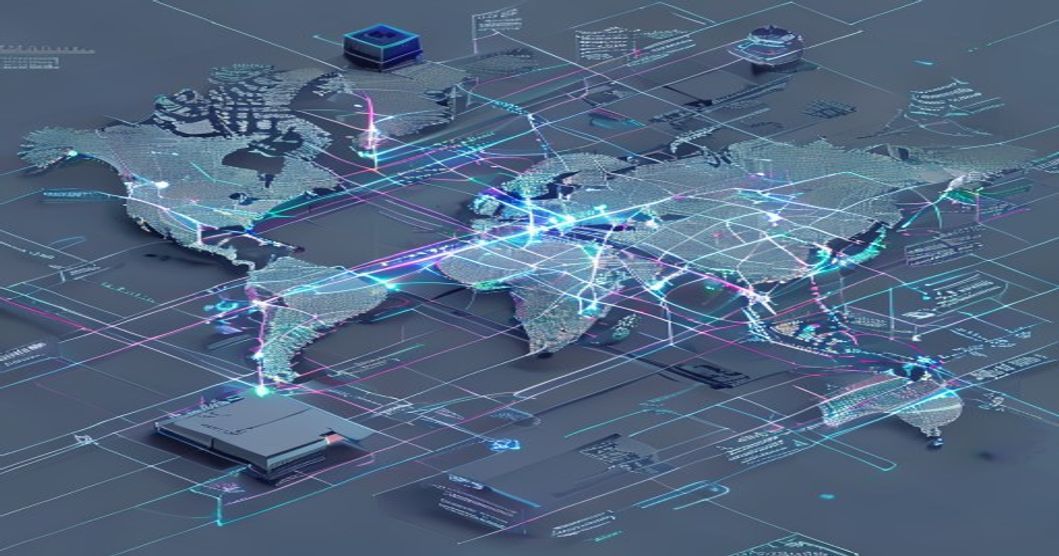

The global hardware supply chain is undergoing its most radical restructuring in decades. For years, engineers and systems architects operated under a predominantly globalized paradigm: you sourced your edge compute from one continent, your perception sensors from another, and your power electronics from whichever manufacturer offered the best cost-to-performance ratio. Today, that operational model is colliding with a hard geopolitical reality.
With sweeping regulatory actions, the Federal Communications Commission (FCC) has effectively drawn a hardware iron curtain across the United States market. By banning specific classes of foreign-made advanced robotics and power inverters, regulators have signaled that physical machinery is no longer just a mechanical asset—it is a critical national security node. For technical leaders, this shift means that software-defined systems are now strictly bound by hardware-level geopolitical borders. Understanding this new landscape requires a deep dive into the regulatory definitions, architectural vulnerabilities, and market realities reshaping modern engineering.
Anatomy of the Ban: Defining ‘Advanced Robotic Devices’
To understand how the FCC regulates machinery, we have to look past commercial marketing terms and examine the core functional criteria outlined in the policy. The regulatory scope does not target remote-controlled toys or factory floor conveyor belts; it focuses squarely on autonomous cyber-physical systems capable of interacting with and perceiving the physical world.
The ban zeroes in on three primary capabilities:
- Autonomous Locomotion: The ability of a machine to navigate physical space without continuous human teleoperation.
- Obstacle Avoidance: Dynamic path planning and real-time reaction to unexpected environmental barriers.
- Environment Perception: The systematic gathering, processing, and interpretation of surrounding data via onboard sensor suites.
When these capabilities converge within a single architecture, the hardware falls under immediate regulatory scrutiny. This definition explicitly captures the vanguard of modern robotics: humanoid platforms, quadrupedal inspection dogs, and autonomous industrial transport units.
[Sensors: LiDAR, Depth Cameras, IMUs]
               │
               ▼
[Edge Compute: CPUs/GPUs executing SLAM] ──► [Telemetry / Network Chip]
               │                                       │
               ▼                                       ▼
[Actuators & Locomotion]                      [National Security Scope]
At the heart of these systems are dense sensor suites—LiDAR units, high-resolution depth cameras, and ultrasonic arrays—that continuously ingest telemetry about physical environments. Because these sensors feed data directly into local or cloud-connected processing pipelines, regulators view them not merely as navigation tools, but as potential vectors for persistent surveillance and unauthorized data exfiltration.
The Power Inverter Vector: Sungrow, Huawei, and Grid Vulnerability
While humanoid robots grab media headlines, the inclusion of power inverters in the ban represents a far more pervasive systemic risk. Power inverters are the vital translation layer of modern electrical grids, converting DC power from solar arrays and wind turbines into synchronized AC power for the grid.
Why did power inverters become a primary national security target alongside autonomous robots? Modern inverters are no longer simple analog transformers; they are sophisticated, network-connected IoT devices equipped with remote firmware update capabilities, real-time telemetry, and smart-grid communication protocols.
The ban directly impacts dominant global players in the US solar ecosystem, notably companies like Sungrow and Huawei. For years, these vendors supplied a massive share of the utility-scale and commercial inverters deployed across North America due to their aggressive pricing and advanced grid-forming features. However, their deep integration into critical energy infrastructure introduced a vulnerability vector. If a malicious actor or state adversary were to compromise the remote management interfaces of millions of distributed inverters, the potential for coordinated grid destabilization or localized blackouts shifts from a theoretical exercise to a plausible threat scenario. This challenge mirrors broader concerns about how AI data centers impact power grid stability, where load management and power electronics form the thin red line between continuous operation and systemic collapse.
| Feature / Metric | Legacy Analog Inverters | Modern Smart Inverters (Targeted) |
|---|---|---|
| Connectivity | Isolated / None | Wi-Fi, Cellular, Ethernet (IoT) |
| Control Interface | Physical dials, local serial port | Cloud dashboards, remote APIs |
| Firmware Updates | Manual physical flashing | Over-The-Air (OTA) automated pushes |
| Grid Interaction | Passive conversion | Active grid-forming, frequency regulation |
Under the Hood: The Vulnerable Architecture of Modern Robotics
To appreciate why regulators are taking such a heavy-handed approach, we need to inspect the software and hardware stacks running inside modern robots and smart power electronics. The architectural vulnerability of these systems stems from a tightly coupled cocktail of high-performance edge computing and ubiquitous network connectivity.
Modern robots rely on localized edge processors—typically power-hungry GPUs and specialized NPUs (Neural Processing Units)—to execute complex algorithms in real time. Chief among these is SLAM (Simultaneous Localization and Mapping). SLAM algorithms process data streams from cameras and LiDAR to construct millimeter-accurate 3D maps of unfamiliar environments while simultaneously tracking the robot’s exact position within that map.
# Conceptual loop of an edge-based SLAM and perception node
while robot.is_active():
    sensor_data = lidar.read() + depth_camera.get_frame()
    local_map = slam_engine.update(sensor_data)

    # The vulnerability vector: continuous telemetry transmission
    if network.is_connected():
        telemetry_stream.send(local_map.metadata)

    navigation_command = path_planner.compute(local_map)
    actuators.execute(navigation_command)
The engineering dilemma is straightforward: for a robot to be useful, it must map its environment. But the very data required to map a warehouse, a utility plant, or a city street—high-fidelity spatial models, thermal signatures, structural blueprints—is also sensitive intelligence. When this local processing is paired with network chips (Wi-Fi, cellular, or satellite modems) designed for remote telemetry, maintenance, and fleet management, the attack surface expands exponentially. A backdoor or an unpatched vulnerability in an edge component gives an external entity a persistent window into physical infrastructure.
Supply Chain Shockwave: Market Impacts and Cost Realities
The transition from a globalized component market to a bifurcated, localized framework exacts an immediate economic toll. For US industries relying on imported hardware, the regulatory shockwave is reshaping pricing models, project timelines, and supply chain strategies.
In the consumer and industrial robotics sectors, engineering teams are facing sudden price surges and severe supply shortages. Robots built with domestic or compliant supply chains carry a heavy cost premium, as manufacturing lines, sub-assembly fabrication, and silicon sourcing are rapidly pulled out of traditional manufacturing hubs.
In the renewable energy sector, the fallout is equally pronounced. Scaling utility-scale solar arrays relied heavily on the cost-efficiency of foreign inverters. Replacing those components with compliant alternatives introduces bottlenecks, delays project timelines, and increases capital expenditure. Furthermore, foreign hardware vendors now face an insurmountable compliance overhead, effectively locking them out of the world’s most lucrative technology market and forcing a structural recalibration of global trade flows.
The Pivot to Onshoring: Navigating the New Domestic Landscape
Necessity is the mother of architectural invention. As foreign hardware options vanish behind regulatory walls, the engineering community is witnessing an aggressive pivot toward domestic manufacturing and “onshoring.”
In the robotics sector, venture capital and defense tech investments are pouring into US-based startups specializing in humanoid and quadrupedal platforms. These companies are building their supply chains from the silicon up with domestic or allied partners, prioritizing hardware-level security as a primary design constraint rather than an afterthought.
[Traditional Supply Chain]
Global Sourcing ──► Low Cost ──► High Interoperability ──► Vulnerable Telemetry

[New Domestic Landscape]
Onshored Assembly ──► Higher Capex ──► Hardware Trust/Verifiability ──► Data Sovereignty
This shift is redefining data sovereignty in system design. Hardware-level security now demands verifiable supply chains where every component—down to the individual microcontroller and network interface card—can be audited for provenance. Architects are being forced to design systems that can operate in “air-gapped” environments or communicate exclusively through zero-trust, domestically hosted infrastructure, abandoning the convenient cloud-management dashboards that previously relied on foreign servers.
Future Outlook: The Fragmented Hardware Ecosystem
The implementation of the FCC ban is not a temporary policy adjustment; it is a permanent structural shift. Over the next decade, we are heading toward a bifurcated global technology ecosystem characterized by distinct “East” and “West” hardware standards.
For engineers and system architects, this means the end of universal component interoperability. Designing a cyber-physical system will require navigating two divergent paths of silicon development, communication protocols, and regulatory frameworks. R&D velocity may temporarily slow as supply chains duplicate efforts and domestic manufacturing ramps up to meet demand.
Ultimately, the hardware iron curtain forces a sobering realization upon the technical community: in an era where software defines capability, hardware dictates survival. As we design the next generation of autonomous machines and smart energy grids, security, provenance, and data sovereignty must be baked into the foundational silicon, long before a single line of SLAM code is ever compiled.
