The Texas Data Center Moratorium: How the AI Energy Crisis is Redefining Grid Interconnection
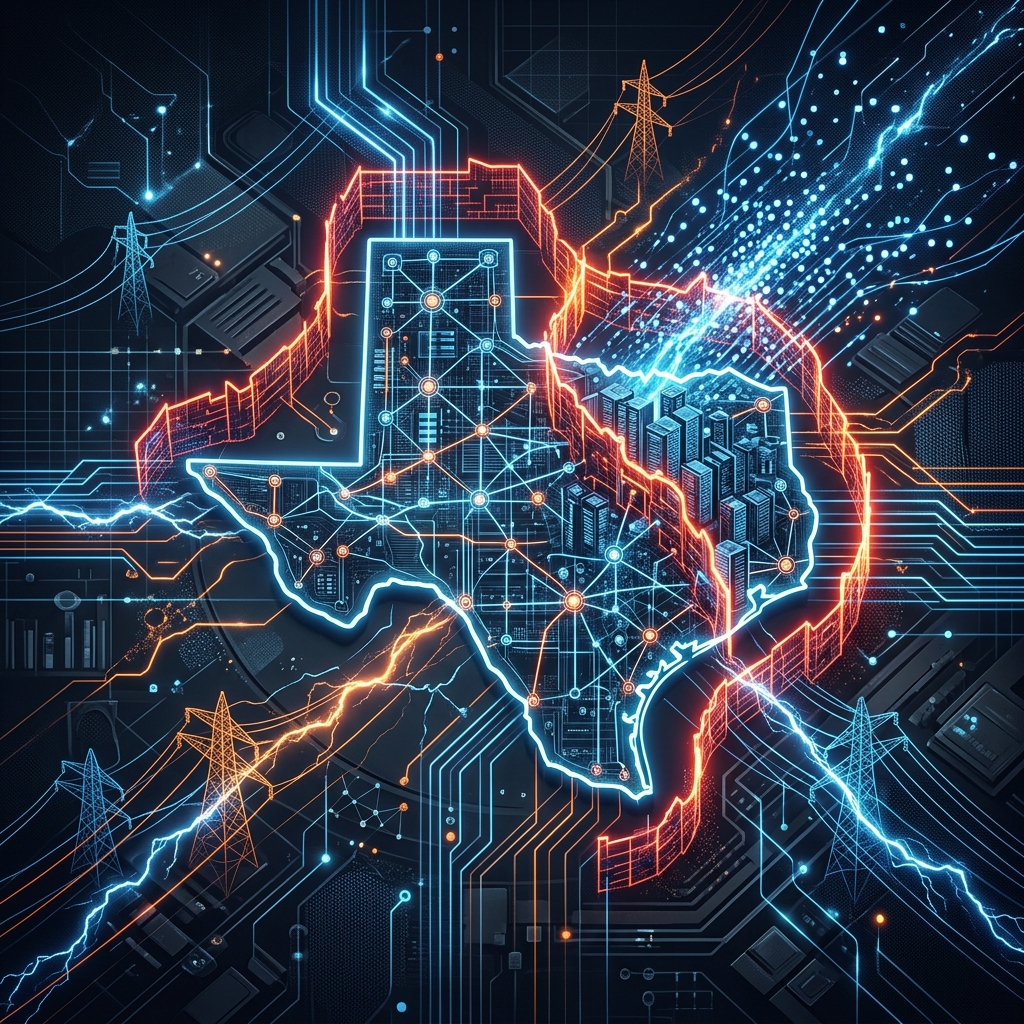

The scaling laws driving modern large language models have put us on a direct collision course with the laws of thermodynamics. For years, the software engineering community treated compute as an elastic, cloud-bound abstraction. If you needed to train a larger cluster, you simply provisioned more nodes. But as we push past hundreds of billions of parameters, that abstraction is shattering against the physical reality of our electrical infrastructure. Nowhere is this tension more visible than in Texas, where an unprecedented surge in AI data center demand has forced state regulators to slam the brakes on grid expansion.
Governor Greg Abbott’s proposed moratorium and comprehensive audit for grid-connected data centers marks a watershed moment for the industry. The ERCOT (Electric Reliability Council of Texas) interconnection queue is currently inundated with massive capacity requests—a staggering portion of which belong to AI training facilities. This backlog is not merely a bureaucratic bottleneck; it is a symptom of a systemic collision between exponential digital scaling and finite electrical capacity. As infrastructure architects and software engineers, we can no longer design systems assuming infinite power is available at the plug. We need to understand how the Texas grid crisis is reshaping data center engineering, forcing a pivot toward decentralized power generation, and fundamentally altering how we think about AI compute constraints.
Anatomy of the Crisis: ERCOT Under Siege
To understand why Texas has become ground zero for this energy crisis, we have to look closely at how a modern AI data center diverges from a traditional enterprise or cloud facility. A standard 100MW+ GPU cluster operates with a power profile that looks nothing like a traditional web hosting or database architecture. Traditional data centers feature dynamic workloads that fluctuate throughout the day, allowing operators to leverage statistical multiplexing and oversubscribe their power capacity.
AI training clusters, by contrast, run at maximum utilization for weeks or months on end. When you boot up thousands of H100 or B200 accelerators to crunch matrix multiplications, your power draw does not fluctuate; it sits flat at maximum capacity 24 hours a day, 7 days a week. This creates severe voltage stability risks and transmission congestion during peak demand cycles on the ERCOT grid.
| Metric / Dimension | Traditional Enterprise Data Center | Modern AI Training Cluster |
|---|---|---|
| Workload Profile | Dynamic, fluctuating (follows diurnal web traffic) | Continuous, flat-line maximum load (24/7 training) |
| Power Density | 5 – 10 kW per rack | 40 – 100+ kW per rack |
| Grid Interaction | Flexible, responsive to demand-response signals | Rigid, highly vulnerable to curtailment |
| Primary Bottleneck | Network latency and bandwidth | Power delivery and thermal dissipation |
This insatiable appetite for baseload power has sparked intense economic and political friction. Local ratepayers, commercial businesses, and state regulators are increasingly vocal about the risks posed by tech giants straining regional grids to their breaking point. When a single data center demands as much electricity as a mid-sized city, the risk of localized brownouts and surging energy prices becomes a hot-button political issue. The ERCOT queue backlog is the direct result of regulators attempting to hit pause and ask a fundamental question: How do we protect the grid without choking off technological progress?
The Loophole and the Pivot: Behind-the-Meter (BTM) Generation
Faced with mounting regulatory scrutiny and multi-year delays in the ERCOT interconnection queue, tech conglomerates and infrastructure developers are executing a massive strategic pivot. The key to bypassing the central grid bottleneck lies in a specific regulatory exemption: behind-the-meter (BTM) power generation.
“By decoupling data center campuses from the central transmission grid, operators are transforming themselves from passive consumers into active, on-site utility operators.”
Texas has quickly become the leading U.S. testing ground for announced BTM capacity. Under a BTM architecture, a data center is built directly adjacent to—or even shares a physical site with—dedicated power generation facilities. Because the electricity never traverses the public transmission lines managed by ERCOT, these projects can often bypass the grueling interconnection queue and regulatory audits that plague grid-tied developments.
This model changes the relationship between compute and energy. Instead of relying on regional utilities to balance supply and demand, hyperscalers are taking direct control of their power supply. This shift introduces its own set of engineering challenges. Building and maintaining a private power plant requires an entirely different operational skill set than managing a server farm, forcing tech companies to partner heavily with traditional energy producers or acquire generation assets outright. For a deeper look at how these dynamics intersect with national policy and infrastructure resilience, read our analysis on AI data centers and grid stability threats.
Engineering the Decentralized Data Center
Moving away from the central grid means infrastructure architects must design autonomous, off-site microgrids capable of supporting extreme compute densities. This requires deploying robust, industrial-grade power generation technologies directly to the data center campus.
Power Generation Technologies
- Aeroderivative Turbines: Adapted from aviation jet engines, these turbines offer rapid startup times and high flexibility, making them ideal for handling the dynamic load shifts of auxiliary systems, though less optimal for pure continuous baseload than heavy-duty frames.
- Combined-Cycle Gas Turbines (CCGT): These systems capture waste heat from gas turbines to drive a steam turbine, achieving high thermal efficiencies. CCGT units serve as the primary baseload workhorses for multi-gigawatt AI campuses.
- Mobile Gas Generators: Increasingly deployed for rapid-deployment setups, these units allow infrastructure teams to spin up interim power generation while permanent infrastructure is being constructed, cutting down time-to-market for new clusters.
Integrating these generation assets with high-density compute infrastructure creates complex engineering hurdles. Balancing the variable outputs of on-site turbines with the unyielding, high-density liquid cooling loads of modern accelerators requires sophisticated power management software. If a turbine trips offline, the transition to backup battery energy storage systems (BESS) must happen in milliseconds to prevent catastrophic hardware resets during a multi-week model training run.
Managing these localized grids also ties directly into broader conversations about how AI data centers impact power grid stability when public assets are involved. When off-grid systems fail or need supplementary power, the ripple effects can still be felt by regional operators.
The Bottleneck Effect: Software Efficiency vs. Hardware Hunger
Physical power limits do not just dictate where we build data centers; they fundamentally alter software architecture and engineering paradigms. For years, the prevailing philosophy in AI development was brute-force scaling: if a model underperformed, you simply threw more parameters, more data, and more compute at the problem.
When electricity becomes a scarce, expensive commodity, that luxury evaporates. Hardware-level energy caps force a radical shift toward algorithmic efficiency. We are seeing a direct parallel between the physical constraints of the Texas grid and the rise of low-overhead engineering methodologies popularized by constrained environments.
[Physical Power Limit]
       │
       ▼ forces
[Hardware Energy Caps]
       │
       ▼ drives
[Algorithmic Efficiency & Quantization]
       │
       ▼ enables
[Sustainable AI Scaling Without Grid Collapse]
When compute is expensive and power is hard to secure, efficiency ceases to be an optimization metric and becomes a survival requirement. This macro-level squeeze encourages the adoption of lean architectures, quantization techniques, and sparse models that deliver comparable performance at a fraction of the power cost. For a detailed exploration of how developers are adapting their codebases to navigate these physical realities, check out our insights on the DeepSeek strategy for engineering around AI compute constraints.
The macroeconomic implications are profound. If localized power bottlenecks persist in major tech hubs like Texas, global tech expansion will no longer be limited by the availability of silicon, but by the square footage and gas supply available for private microgrid campuses.
Future Outlook: Energy Independence and the Next Era of AI Infrastructure
The Texas data center moratorium is not a temporary roadblock; it is a preview of the new normal for AI infrastructure. As energy scarcity collides with exponential compute demands, the boundary between the tech industry and the energy sector will continue to blur.
We can expect an acceleration in the adoption of advanced power solutions by tech giants striving for complete energy independence. The next generation of AI superclusters will likely look less like traditional server warehouses and more like self-powered, isolated industrial campuses featuring dedicated natural gas generation, modular nuclear reactors (SMRs), and advanced BESS arrays.
For software engineers and infrastructure architects, this means the days of treating infrastructure as someone else’s problem are over. Designing resilient systems now requires an acute awareness of energy constraints, from the software level up to the turbine output. To stay ahead of these shifts, keep an eye on how the tech industry continues to move towards efficient AI deployment models. The engineers who thrive in this next era will be those who design software that respects the physical limits of our power grids.
