The Great Robotics Onshore Pivot: How US Distributors are Adapting to the FCC Foreign Hardware Ban
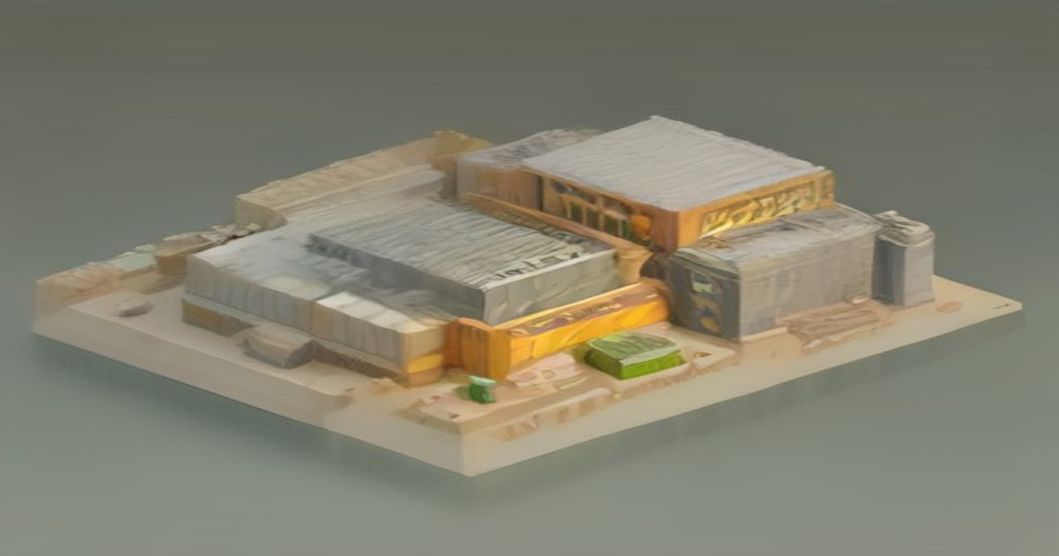

For engineering teams and distributors who spent the early 2020s integrating agile foreign-made hardware into enterprise workflows, the ground shifted abruptly. RoboStore, a prominent distributor that previously supplied over 1,500 advanced humanoid and quadruped models to elite institutional clients like OpenAI, Nvidia, Amazon, Harvard, and MIT, found its core business model rendered untenable overnight. The catalyst was a sweeping regulatory shift that forced the company to shutter its foreign import operations entirely, spawning a new domestic venture, Robo Inc., and a strategic pivot toward a massive 66,000-square-foot manufacturing facility on Long Island.
This story is not an isolated corporate pivot. It is the leading edge of a profound structural realignment across the American automation sector. As federal regulators slam the door on generalized imported hardware, robotics engineers, systems integrators, and technical leadership must navigate an entirely new compliance landscape. Understanding how to adapt your software stacks, secure your supply chains, and redesign your hardware architectures is now a core competency for survival.
Regulatory Anatomy: Decoding the 2026 FCC Bans and National Security Drivers
The regulatory tsunami hitting the robotics sector is rooted in growing anxieties over critical infrastructure, data exfiltration, and supply chain weaponization. For years, overseas manufacturers—most notably producers of popular bipedal and quadruped platforms like Unitree—dominated global markets by offering high-performance hardware at price points that domestic startups struggled to match. However, the deep integration of high-resolution cameras, LiDAR arrays, ultrasonic sensors, and continuous telemetry pipelines created a severe vulnerability profile.
The turning point materialized through a coordinated legislative and regulatory blitz:
- March 2026: US lawmakers introduced the American Security Robotics Act, directly targeting foreign-made robotic systems deployed in critical infrastructure and sensitive enterprise environments.
- June 2026: The GUARD Act followed, expanding restrictions on procurement and federal funding for autonomous systems utilizing foreign components with remote-telemetry capabilities.
- July 2026: The Federal Communications Commission (FCC) enacted sweeping bans halting the importation of new models of foreign-made humanoid and quadruped robots.
These measures were not driven by economic protectionism alone; they stem from legitimate concerns regarding hardware security. Modern robots are essentially data centers on legs. They map corporate facilities, capture continuous high-definition video feeds, collect biometric sensor data, and maintain persistent cloud connections back to manufacturer-controlled servers.
For a deeper dive into how these regulatory instruments are reshaping power grids and industrial hardware, read our analysis on FCC bans and foreign robotics inverters.
The technical reality is that once a device with root-level firmware access and cellular telemetry sits inside a corporate R&D lab or a defense contractor’s warehouse, auditing its true behavior becomes nearly impossible. Hardware-level backdoors, unverified pseudo-random number generators in cryptographic chips, and closed-source firmware blobs present an unacceptable risk profile.
To mitigate risks similar to those found in compromised supply chains—akin to historical vulnerabilities like the Coldcard firmware PRNG vulnerability—federal policy now dictates that hardware trust must be established at the silicon and source level.
Architectural Realignment: Moving Beyond the Generalized Imported Chassis
The sudden stoppage of imported bipedal humanoids is forcing engineering teams to rethink robotic form factors from the ground up. The previous industry consensus favored a “one-size-fits-all” generalized humanoid chassis—a bipedal robot designed to mimic human morphology to fit seamlessly into human-centric environments. While flexible in theory, generalized bipeds are notoriously difficult to stabilize, power-hungry, and mechanically complex.
With imported general-purpose platforms restricted, engineering leadership is shifting toward application-specific, modular architectures optimized for specific operational domains:
| Application Domain | Legacy Approach (Imported Bipedal) | Modern Domestic Approach (Onshored Modular) |
|---|---|---|
| Healthcare & Concierge | Generalized bipedal humanoid | Wheeled chassis combined with an articulated humanoid torso |
| High-Security Enterprise | General-purpose quadruped robot | Specialized, ruggedized quadrupeds with secure local compute |
| Industrial Logistics | Generic wheeled bipedal hybrids | Dedicated AMRs (Autonomous Mobile Robots) with modular arms |
This modular shift yields immediate dividends in reliability and power efficiency. By placing a humanoid torso atop a stable wheeled chassis for healthcare or concierge applications, engineers eliminate the massive energy overhead required for continuous bipedal balance. This drastically extends battery life while simplifying the kinematic control loops.
Similarly, high-security enterprise deployments are moving toward specialized quadrupeds equipped with domain-specific sensor payloads rather than multi-purpose consumer models. By abandoning the quest for a universal humanoid, American robotics teams are building systems that are cheaper to manufacture, easier to maintain, and vastly more reliable in production environments.
Blueprint for Onshoring: Building a US-Compliant Robotics Facility
Transitioning from an importer-distributor model to a domestic manufacturer requires solving immense logistical and engineering hurdles. When Robo Inc. planned its 66,000-square-foot facility on Long Island, the blueprint demanded an entirely reimagined manufacturing pipeline designed to operate without reliance on restricted foreign component ecosystems.
Rapid Prototyping and Localized Tooling
To accelerate iteration cycles without waiting on overseas supply chains, domestic facilities are heavily investing in localized infrastructure:
- Industrial 3D Printing: Utilizing large-format selective laser sintering (SLS) and fused deposition modeling (FDM) for custom structural chassis and bracket creation.
- Domestic CNC Milling: Partnering with regional precision machine shops for high-stress aluminum and titanium structural components.
- In-House Actuator Assembly: Designing brushless DC (BLDC) motor controllers and harmonic drives locally to circumvent component-level embargoes.
Sourcing Secure Components
The hardest bottleneck in onshoring robotics is the bill of materials (BOM). Securing cameras, depth sensors, IMUs, and biometric modules that are entirely free from restricted supply chains requires extensive vetting. Engineering teams must audit every semiconductor vendor to ensure microcontrollers and cryptographic coprocessors originate from trusted allied nations.
{
  "component_audit": {
    "module": "Depth_Sensor_Array_v2",
    "origin": "Domestic_Secure_Fab",
    "firmware_status": "Open_Source_Audited",
    "telemetry_lockdown": true,
    "cryptographic_verification": "SHA-256_Signed"
  }
}
Firmware Verification Pipelines
Trust cannot be assumed; it must be continuously verified. A compliant manufacturing facility requires an air-gapped or strictly controlled continuous integration/continuous deployment (CI/CD) pipeline for firmware. Every binary flashed onto an actuator controller or main compute board must pass automated static analysis and hardware-in-the-loop (HIL) testing to guarantee that no unauthorized external communication channels exist.
Systems Integration and Enterprise Impact: Rebuilding Trust with Institutional Clients
For institutional buyers—universities, defense contractors, and enterprise tech giants like Amazon, Nvidia, and OpenAI—the regulatory pivot means their existing software stacks and AI training pipelines must be rapidly adapted to run on new domestic hardware profiles.
Transitioning from foreign hardware to US-compliant platforms involves significant integration engineering:
- Middleware Adaptation: Most advanced robots run on ROS (Robot Operating System) or ROS2. Engineers must rewrite hardware abstraction layers (HAL) to map legacy control nodes to the new domestic motor controllers, sensor suites, and safety interlocks.
- Ecosystem Continuity: Enterprise AI pipelines trained on Nvidia Jetson or AWS-backed simulation environments must maintain backward compatibility while interfacing with newly minted domestic chassis. This requires containerized hardware interfaces using Docker and Kubernetes to isolate hardware-specific drivers from higher-level cognitive models.
- Supply Chain Buffering: With a commercial rollout targeted for Q1 2027, institutional clients are scrambling to secure allocation slots in domestic production runs, turning what was once a simple procurement transaction into a strategic partnership.
Future Outlook: The 2027 Landscape for American Commercial Robotics
The vacuum left by the sudden exit of mass-produced foreign hardware has created an unprecedented window of opportunity for American robotics startups and contract manufacturers. As we look toward the remainder of 2027, the domestic robotics ecosystem is undergoing a dramatic expansion fueled by localized assembly plants and venture capital pivoting toward hard tech and compliance-first infrastructure.
However, this transition is not without friction. Scaling domestic manufacturing requires navigating severe talent shortages in precision mechatronics, securing long-term capital for heavy capital expenditure (CapEx) investments in factory tooling, and streamlining the sourcing of raw materials.
Despite these challenges, the trajectory is clear. The era of unchecked importing of general-purpose foreign hardware is over. By embracing modular architectures, rigorous hardware security audits, and localized manufacturing, American robotics distributors and engineers are laying the foundation for a resilient, secure, and commercially viable domestic automation industry.
