Securing Critical Infrastructure: F-16s, USVs, and the New Era of Maritime Drone Warfare
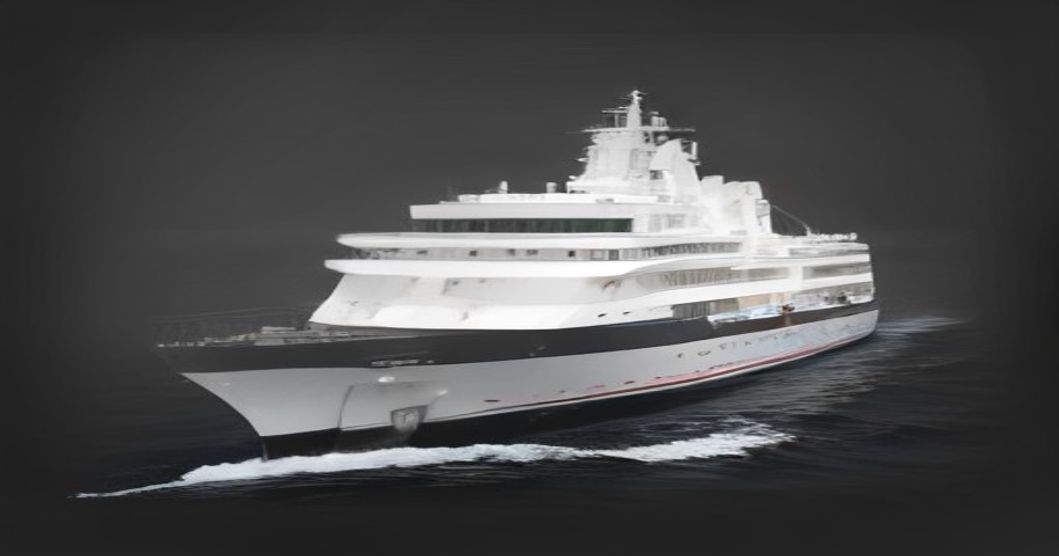

The Black Sea has quietly transformed into a live-fire testing ground for the future of warfare. When Romanian F-16 fighter jets scrambled to intercept and destroy a Russian explosive uncrewed surface vessel (USV) operating dangerously close to the Neptun Deep offshore gas platform, it wasn’t just a localized border skirmish. It was a clear warning shot for European critical infrastructure protection. For decades, offshore energy platforms were designed to withstand rogue waves, severe corrosion, and standard industrial hazards—not calculated kinetic strikes from autonomous maritime drones.
This intercept event marks a fundamental shift: autonomous drone warfare has officially migrated from tactical, contested battlefields like the open sea lanes of southern Ukraine to critical economic lifelines that sustain entire nations. As software engineers, cybersecurity practitioners, and systems architects, we need to look past the geopolitical headlines and examine the engineering, communications, and defense architectures underpinning this new era of asymmetric maritime conflict.
Anatomy of Modern Uncrewed Surface Vessels (USVs)
To understand how to defend against modern USVs, we first have to understand what makes them tick. Maritime drone architecture has evolved rapidly from crude, remote-controlled jet skis packed with explosives into highly sophisticated, modular, long-range platforms.
Naval experts analyzing recent Black Sea incursions have highlighted several distinct engineering features in these advanced drones:
- Modular Forward-Hull Hangars: Unlike single-purpose suicide boats, advanced USVs feature large, hinged hangars built directly into the forward hull. These bays are versatile, capable of housing secondary payloads, explosive charges, or even launching smaller aerial drones to conduct reconnaissance past the horizon.
- Flat Panel Satellite Antennas: Maintaining command and control (C2) over hundreds of miles of open water requires reliable, high-bandwidth communications. These vessels increasingly integrate flat panel antennas designed to interface with commercial and military satellite constellations—such as Starlink—enabling low-latency telemetry and video streaming back to remote operators.
- Navigational Autonomy Suites: To survive electronic countermeasures, modern USVs rely on inertial navigation systems (INS), GPS-denied dead reckoning, and optical waypoint tracking. This ensures the craft can continue its mission even when primary satellite links are jammed.
- Explosive Payload Delivery Mechanisms: Optimized for hydrodynamic efficiency, the hull structures are packed with high explosives wired to contact detonators, proximity fuses, or remote triggers.
| Feature | Legacy Naval Drones | Modern Advanced USVs |
|---|---|---|
| Communications | Line-of-sight radio links (vulnerable to horizon drop) | Satellite constellations (Starlink, military SATCOM) via flat-panel arrays |
| Payload Delivery | Fixed, single-charge suicide hull | Modular bays supporting secondary ordnance, mines, or aerial drones |
| Guidance Systems | Manual remote control or basic pre-programmed GPS | Autonomous pathfinding, INS, optical tracking, and resilient fallback modes |
| Cross-Section | Low-profile fiberglass hull | Optimized radar-absorbent materials with low thermal and acoustic signatures |
This mix of commercial off-the-shelf (COTS) hardware and custom military engineering creates a resilient system that is exceptionally difficult to track using legacy maritime radar.
Asymmetric Naval Warfare Meets Critical Energy Assets
The intersection of low-cost autonomous hardware and multi-billion-dollar energy infrastructure represents a nightmare scenario for asset owners. Take the Neptun Deep project in the Black Sea as a prime example. Set to reach full production by 2027, this massive offshore gas extraction initiative is slated to make Romania the largest natural gas producer in the European Union.
From an economic and strategic standpoint, projects like Neptun Deep are irresistible targets. Traditional naval defense doctrines were built around protecting capital ships and securing sea lines of communication against state-sponsored surface fleets and submarines. They were never optimized to deal with a swarm of low-cost, low-radar-cross-section USVs that cost a fraction of a percent of the infrastructure they target.
“The asymmetric equation of modern maritime conflict heavily favors the attacker: a drone costing tens of thousands of dollars can threaten an energy installation worth billions, forcing defenders to expend expensive, limited interceptor assets to neutralize a single threat.”
This asymmetry extends far beyond gas platforms. The wider European energy and digital grid relies on an interconnected web of vulnerabilities:
- Fixed Offshore Platforms: Heavy industrial installations with rigid structures, massive surface areas, and predictable geographic coordinates.
- Subsea Pipelines: Critical conduits running along the seabed, notoriously difficult to monitor continuously across thousands of miles of ocean floor.
- Undersea Communication Cables: The invisible backbone of global internet traffic and financial data exchange, which sit completely exposed to seabed-dwelling drones or surface-laid charges.
When an explosive USV drifts within striking distance of a platform like Neptun Deep, it exposes the reality that our critical infrastructure protection strategies are lagging behind the pace of commercial hardware innovation.
Bridging the Gap: F-16s and Multi-Domain Interception
Using a supersonic fourth-generation fighter jet like an F-16 to intercept a surface drone boat feels a bit like using a scalpel to chop firewood—it works, but it’s an architectural mismatch. However, until specialized maritime interceptor fleets are fully deployed, air forces are being forced to bridge the gap.
Adapting fighter jets for maritime counter-drone operations introduces unique technical hurdles:
- Target Profiling and Radar Clutter: Air-to-air radars are optimized to track fast-moving objects against a clear sky. Scanning the surface of the sea introduces immense clutter from wave reflections, whitecaps, and thermal gradients. Detecting a low-profile, fiberglass or carbon-composite USV requires fine-tuning ground-moving target indication (GMTI) and synthetic aperture radar (SAR) modes.
- Ordnance Selection: Dropping a multi-million-dollar precision-guided bomb on a small, moving drone is economically unsustainable. F-16 pilots must rely on internal 20mm cannons or coordinate with surface vessels to deliver cost-effective kinetic strikes without damaging nearby platforms.
- Multi-Domain Coordination: A successful interception rarely happens in isolation. It requires a tight, low-latency data loop connecting maritime patrol aircraft, coastal radar stations, surface combatants, and airborne F-16s.
This multi-domain dance requires shared tactical data links and real-time sensor fusion. If the radar station spots the USV but cannot cleanly hand off targeting telemetry to the F-16’s onboard fire control computer before the vessel slips out of range, the entire chain fails.
Electronic Warfare, Jamming, and Communications Resilience
At the core of every modern USV is a software stack managing navigation, telemetry, and payload actuation. Because these drones depend heavily on external connectivity for remote piloting and real-time intelligence feeds, electronic warfare (EW) and communications jamming have become frontline defense tools.
[Remote Operator]
       │
       ▼ (Encrypted SATCOM via Flat-Panel Array)
[Low-Earth Orbit / GEO Satellites]
       │
       ▼
[Target USV: Navigation & Payload Control] ──(Jamming Zone)── X (Link Severed)
       │
       ▼
[Fallback: Autonomous Terminal Guidance & INS]
However, relying purely on jamming is a double-edged sword. Advanced USV architectures anticipate network disruption:
- Commercial Satellite Dependency: The use of commercial constellations like Starlink offers high bandwidth for HD video feeds, but it also ties military-grade hardware to commercial network infrastructure and protocols.
- Jamming Vulnerabilities: Directed energy and RF jamming can successfully sever the link between the remote operator and the USV, blinding the drone and stopping manual course corrections.
- Autonomous Fallback: When a communications link goes dark, the USV doesn’t just stop. Modern firmware shifts the drone into an autonomous terminal guidance mode. It relies on pre-programmed GPS/GLONASS waypoints, internal inertial measurement units (IMUs), and optical contour matching to complete its attack run independently.
Consequently, electronic warfare must be paired with kinetic destruction or cyber-takeover capabilities. Merely jamming a drone that is already within visual range of a gas platform might buy you a few minutes, but unless the vessel’s propulsion or guidance systems are physically disabled, it remains a floating bomb.
Architecting the Future: Multi-Layered Defense Shields for Offshore Infrastructure
Securing critical energy assets leading up to 2027 and beyond requires a transition from reactive scrambling to proactive, multi-layered security architecture. Just as modern cloud applications rely on defense-in-depth principles—web application firewalls, zero-trust network access, and database encryption—critical maritime infrastructure needs a layered physical and digital shield.
1. Sensor Fusion at the Edge
Offshore platforms cannot rely solely on distant coast guard radars. Platforms must be retrofitted with localized sensor rings:
- Surface Acoustic Sensors: Hydrophones and passive sonar arrays listening for the distinct acoustic signature of high-speed marine engines.
- Compact Marine Radar: Short-range X-band radars mounted at water level to spot low-profile hulls before they break the horizon.
- Electro-Optical/Infrared (EO/IR) Cameras: AI-powered optical tracking systems capable of distinguishing between legitimate commercial shipping traffic and autonomous hostile craft based on behavioral heuristics.
2. Automated Counter-Drone Systems
Waiting for an F-16 to scramble takes precious time. Platforms require automated, point-defense capabilities:
- Directional RF Jammers: Automated systems that detect unauthorized command links and instantly suppress them within a localized perimeter.
- Hard-Kill Interceptors: Sea-based kinetic interceptors, laser-directed energy weapons (DEWs), or net-deploying counter-drone vessels stationed directly adjacent to high-value assets.
3. Policy and Perimeter Expansion
Technology alone cannot solve a geopolitical security crisis. NATO allies in the Black Sea are actively expanding maritime exclusion zones, increasing maritime patrol frequency, and treating the immediate waters surrounding critical energy hubs as sovereign security perimeters where any unannounced uncrewed vessel is automatically classified as a hostile threat.
Conclusion
The interception near Neptun Deep is not an isolated anomaly; it is a preview of the new normal in maritime security. As autonomous warfare technology matures, the dividing line between civilian economic infrastructure and contested battlefields has effectively vanished.
For developers, security professionals, and policy analysts, this reality demands a fundamental rethinking of how we protect critical systems. Software resilience, hardware-level sensor integration, and multi-domain defense coordination are no longer abstract concepts reserved for futuristic military labs—they are urgent engineering requirements. As Europe races toward its 2027 energy targets, securing the digital and physical perimeters of our critical infrastructure will require continuous technological investment, architectural foresight, and an unwavering commitment to staying one step ahead of the asymmetric threat.
