The Lute of the Middle Way: Finding Harmony Between Effort and Ease
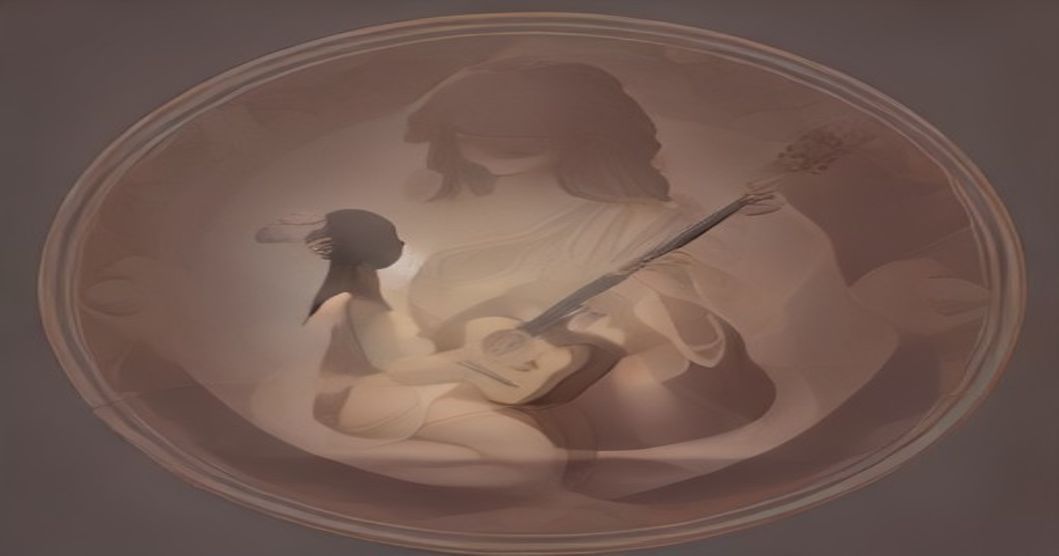

In the Pali Canon, there is a story of a young monk named Sona Kolivisa, who was once a gifted musician. After joining the Buddhist order, Sona practiced with such fierce intensity that his feet bled from walking meditation, yet he found himself no closer to the peace he sought. Frustrated and exhausted, he contemplated returning to his former life of luxury, believing he lacked the capacity for spiritual growth.
Recognizing Sona’s struggle, the Buddha visited him and asked, ‘Sona, when you were a layperson, you were skilled in playing the lute, were you not?’ Sona affirmed that he was. The Buddha then asked, ‘When the strings of your lute were stretched too tight, was it tuneful or playable?’ Sona replied that it was not; the strings would likely snap. ‘And when the strings were too loose, was it tuneful?’ Sona replied that it would produce no sound at all. ‘But when the strings were neither too tight nor too loose, but tuned to an even pitch, was it then tuneful?’ Sona agreed that it was.
The Buddha explained that the same principle applies to our inner life. Over-exertion leads to agitation and burnout, while under-exertion leads to sloth and stagnation. This is the essence of the ‘Middle Way’—the cultivation of a balanced tension that allows the human spirit to resonate.
In our modern era, we are often trapped in a binary of extremes. We are either caught in the ‘hustle culture’ of hyper-productivity, where we stretch our mental and physical strings until they are on the verge of snapping, or we collapse into ‘doom-scrolling’ and passive consumption, where our strings go slack and produce no meaningful melody. We treat life as a problem to be solved through force or an ordeal to be avoided through distraction.
The wisdom of the lute suggests that the ‘Middle Way’ is not a compromise of mediocrity, but a state of high-functioning harmony. To apply this, we must practice ‘Right Effort.’ This means observing when our ambition has turned into a frantic, ego-driven grip that stifles creativity, and conversely, when our need for rest has turned into a lethargic avoidance of responsibility. Like a master musician, we must learn to tune ourselves daily, adjusting the tension of our will so that we may play our part in the world with both strength and grace.
