The Wisdom of the Useless Tree: Finding Freedom in Non-Utility
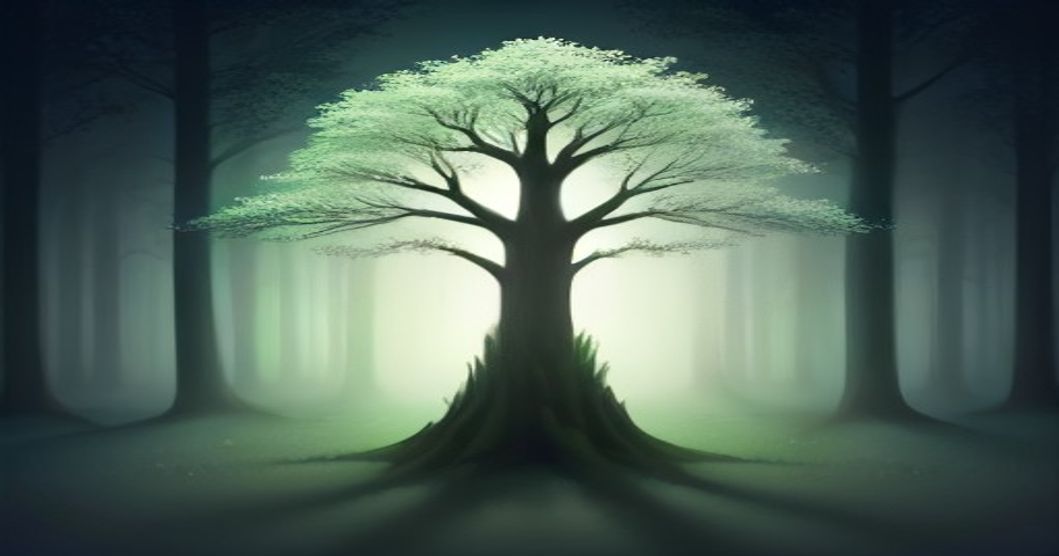

In the ancient texts of the Zhuangzi, there is a story of a carpenter named Shih who, while traveling to the state of Qi, came upon a giant oak tree standing by a village shrine. The tree was so vast that its shade could cover several thousand oxen, and its trunk measured a hundred spans around. While the carpenter’s apprentice stood in awe, the master carpenter barely glanced at it, walking past with indifference.
When the apprentice asked why he ignored such a magnificent specimen, Shih replied, ‘That tree is useless. Make a boat from it, and it will sink; make a coffin, and it will rot; make a tool, and it will break. It is talentless timber. That is why it has been able to grow so old.’
That night, the tree appeared to the carpenter in a dream and spoke: ‘Why do you compare me to your cultivated trees—the cherry, the apple, the orange? As soon as their fruit is ripe, they are stripped. Their utility makes their lives a misery, and they die young. For a long time, I have practiced being useless. To you, I am a failure, but to me, this uselessness is my greatest treasure. If I had been of any use to you, would I have ever grown this large?’
This Taoist parable introduces the radical concept of Wuyong zhi yong—the ‘usefulness of uselessness.’ In a world obsessed with productivity, efficiency, and being a ‘resource,’ Zhuangzi suggests that the more we allow ourselves to be defined by our utility to others, the more we are consumed by them. The fruit tree is valued only for what it can give, and once it stops giving, it is discarded or cut down. The gnarled oak, however, is left alone to fulfill its own nature precisely because it offers nothing to the ‘lumber market’ of the world.
In modern life, we are often pressured to turn every hobby into a ‘side hustle’ and every moment of rest into ‘optimization.’ We feel a deep anxiety if we are not being ‘useful’ to our employers, our social circles, or the economy. We have become like the cherry trees, exhausted by the demand to constantly produce.
To apply the wisdom of the gnarled oak is to reclaim the parts of ourselves that serve no external purpose. It is the realization that your value is not a function of your output. When you cultivate a ‘useless’ inner life—moments of pure presence, play without profit, or thoughts that aren’t meant for a post—you build a sanctuary that the world cannot exploit. By being ‘useless’ to the machinery of constant consumption, you become useful to your own soul, gaining the longevity and peace required to grow into your fullest, most authentic self.
