The Alchemical Churning: Finding Nectar in the Depths of the Mind
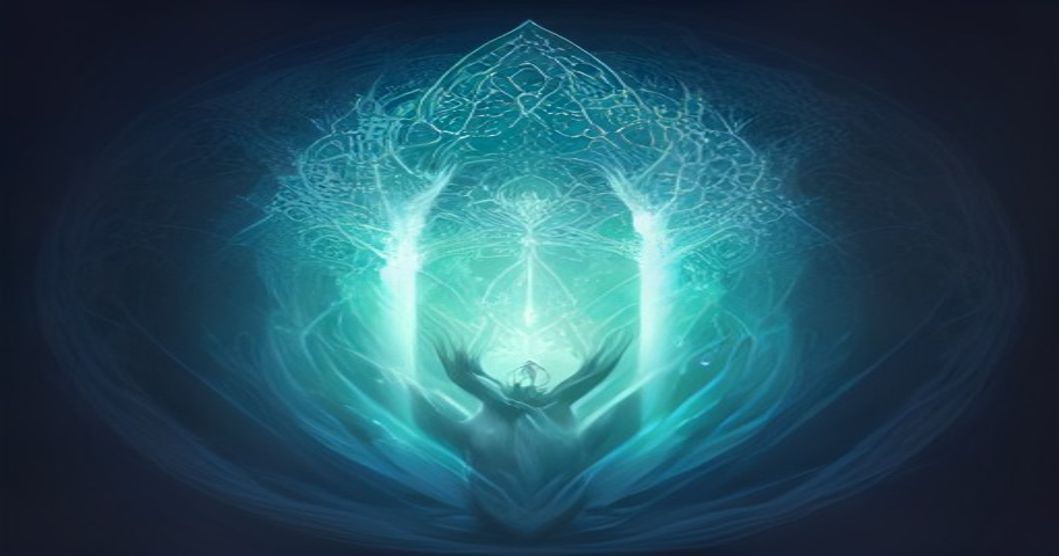

In the ancient Puranic texts of India, there is a cosmic drama known as the Samudra Manthan, or the Churning of the Ocean of Milk. The story begins with the Devas (gods) and the Asuras (demons) realizing that immortality can only be gained by churning the primordial ocean to extract the Amrita, the celestial nectar. They use Mount Mandara as the churning rod and the great serpent Vasuki as the rope. To achieve their goal, these two opposing forces—the light and the dark—must work together, pulling the serpent back and forth to rotate the mountain.
However, before any treasures emerged, the ocean first released a terrifying, lethal poison called Halahala. It was so potent it threatened to annihilate all of creation. Neither the gods nor the demons knew how to handle it. In desperation, they turned to Lord Shiva, the Great Ascetic, who swallowed the poison to save the world, holding it in his throat and turning it blue. Only after this poison was neutralized did the ocean begin to yield its treasures: the moon, the goddess of fortune, the wish-fulfilling tree, and finally, the vessel of nectar.
The Philosophy of the Churning
This myth is a profound allegory for the internal process of self-realization and psychological growth. The ‘Ocean of Milk’ represents the vast, unplumbed depths of the human subconscious. The Devas and Asuras represent the dualities within us—our noble intentions and our shadow impulses. The act of ‘churning’ is the practice of deep introspection, meditation, or any rigorous discipline aimed at self-improvement.
The central lesson of the Samudra Manthan is that the ‘poison’ comes before the ‘nectar.’ When we begin to look deeply into ourselves, we do not immediately find peace and light. Instead, we often stir up long-buried traumas, repressed fears, and the ‘toxic’ aspects of our personality. Most people abandon their journey at this stage, mistaking the surfacing of these difficulties for failure. Yet, the myth suggests that the poison is an inevitable byproduct of the process; it must be faced and ‘transformed’ (like Shiva’s blue throat) rather than ignored or fled from.
Modern Application: Embracing the Shadow
In modern life, we are often sold a version of ‘wellness’ that is purely additive—more positivity, more productivity, more comfort. We are taught to bypass the uncomfortable. The Samudra Manthan reminds us that true transformation is subtractive and transformative.
When you start a new path—be it a career change, a deep relationship, or a mental health journey—you are ‘churning’ your life. Do not be surprised when the first thing to emerge is the ‘Halahala’: the anxiety of the unknown, the surfacing of old insecurities, or the friction of changing habits. This is not a sign that you are on the wrong path; it is a sign that the churning is working.
To reach the ‘nectar’—the state of flow, inner resilience, and clarity—one must develop the ‘Shiva-like’ capacity to sit with discomfort. By acknowledging our internal poisons without letting them consume us, we clear the way for our highest potential to emerge. The treasures of the mind are not found on the surface; they are won by those brave enough to stir the depths and endure the initial sting of what they find there.
