The Mirror of the Thirty Birds: Seeking What Was Never Lost
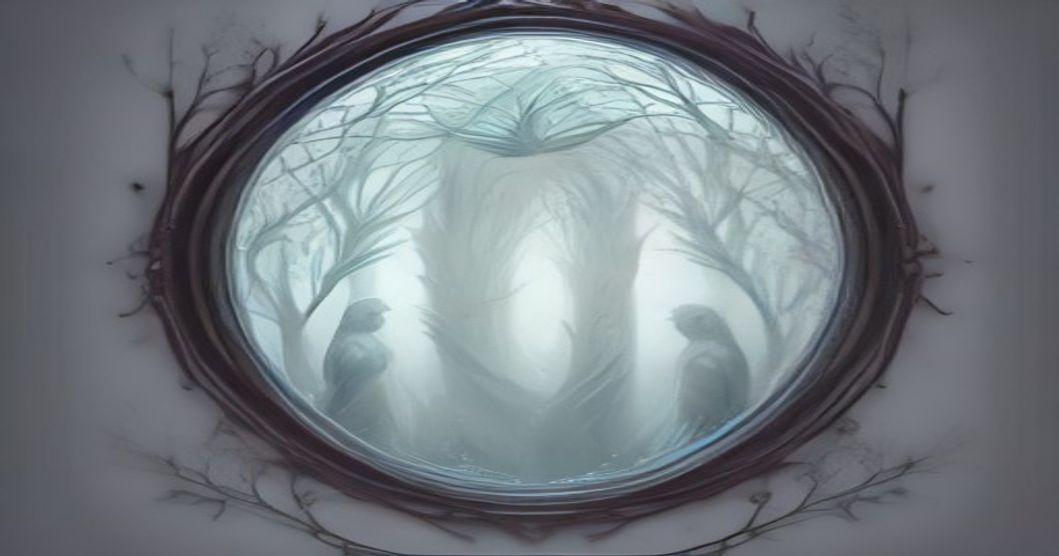

In the twelfth century, the Persian Sufi poet Farid ud-Din Attar composed an allegorical masterpiece known as Mantiq al-Tayr (The Conference of the Birds). In this tale, the birds of the world assemble, lamenting their chaotic lack of leadership and direction. The wise hoopoe steps forward and announces that they indeed possess a rightful sovereign: the mythical Simorgh, an all-wise, luminous bird residing at the summit of Mount Qaf, the axis of the cosmos. To dwell in the presence of the Simorgh, however, requires crossing seven perilous, ego-shattering valleys.
The birds hesitate, each voicing a familiar human excuse. The nightingale cannot leave his beloved rose; the parrot clings to her cage of gilded safety; the duck cannot abandon the comfort of the water; the hawk refuses to yield his royal prestige. Yet, stirred by the hoopoe’s call, thousands eventually take flight.
One by one, through the Valleys of Quest, Love, Knowledge, Detachment, Unity, Wonderment, and finally Annihilation (Fana), the vast flock is winnowed away. Some drown in the sea of desire; others perish from exhaustion, despair, or the inability to let go of their previous identities. Out of the vast multitude, only thirty bedraggled, featherless, and trembling birds survive to reach the precipice of Mount Qaf.
Exhausted and trembling, they are ushered into the throne room of the great King. A radiant curtain is drawn aside, and they gaze forward to meet the divine majesty they sacrificed everything to see. But there is no crowned monarch upon the throne. Instead, they find themselves gazing into a spotless mirror. In Persian, si means ‘thirty’ and morgh means ‘bird.’ Looking upon the Simorgh, they behold only themselves: the thirty birds transformed into a single, unified reflection. The divine king they crossed worlds to find had been the essence of their own nature all along.
The Illusion of the Distant Horizon
Attar’s allegory strikes at the heart of human longing. We instinctively operate under the assumption that completeness is an external commodity situated far away in time or geography. We turn our gaze toward distant saviors, future credentials, perfected relationships, or ultimate milestones, convinced that our present inadequacy will be cured once we arrive at the summit of our chosen mountain.
Yet the journey of the thirty birds reveals an exquisite paradox: the pilgrimage was not futile, even though the destination held nothing external. Had the birds simply stayed in their gardens being told, “You are already the Simorgh,” the truth would have remained an abstract dogma, an intellectual indulgence while their attachments kept them chained. They had to traverse the deserts of detachment and the fires of self-emptying not to acquire divinity, but to burn away the false identities that blinded them to it.
Navigating the Modern Valleys
In our contemporary lives, we suffer acutely from what psychologists term “arrival fallacy”—the belief that arriving at a desired goal will deliver permanent contentment. We spend decades running on the hedonic treadmill, imagining that peace will finally be granted once our careers plateau, our bank accounts cross a threshold, or our social standing is secured. Like the nightingale or the hawk, we bargain endlessly with life, seeking transformation without being willing to surrender our pet attachments.
Attar’s fable invites us to shift our paradigm in three essential ways:
- Reframe Adversity as Cleansing: The tribulations of life—loss, uncertainty, career pivots, heartbreak—are not cruel detours keeping you from your life; they are the seven valleys. Their function is not to punish you, but to strip away the trivial masks, pretenses, and borrowed identities that clutter your attention.
- Withdraw the Outward Projection: Stop demanding that a job, a mentor, an institution, or an ideology save you. The sanctuary you seek cannot be bestowed from the outside. External teachers and frameworks are merely hoopoes—they can guide you toward the path, but they are not the sovereign.
- Recognize the Native Self: The peace, awareness, and capacity for stillness you seek in the future are the foundational canvas upon which your present experience is already unfolding.
When we stop demanding that external reality provide what only self-awareness can uncover, the exhausting search comes to an end. We find, as the thirty birds did upon Mount Qaf, that the journey was never about becoming something we were not; it was about stripping away everything we never truly were.
