The Mirror of the Heart: Rumi’s Parable of the Two Painters
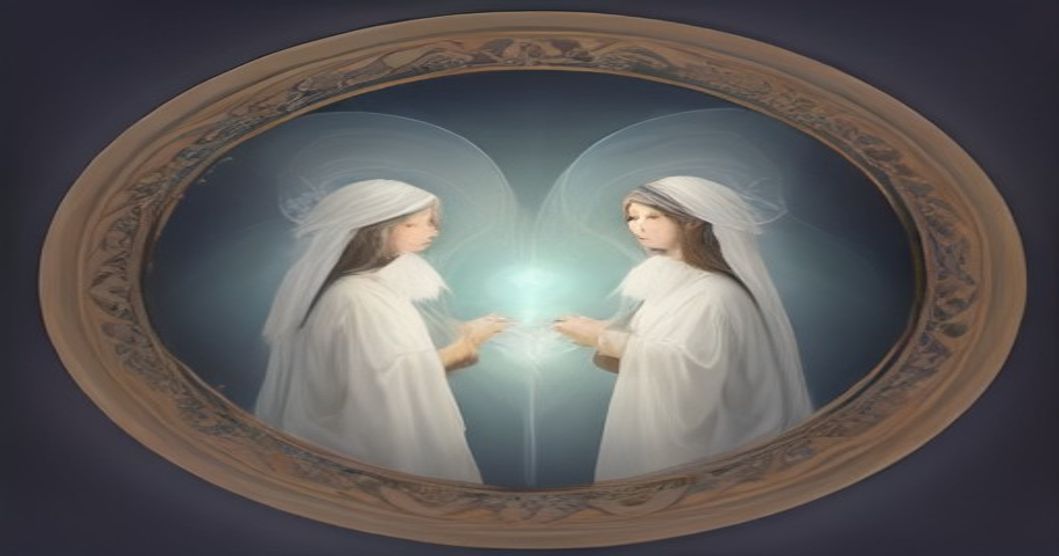

In the Masnavi, the 13th-century Sufi poet Jalaluddin Rumi tells a story of a royal competition between two groups of artists: the Chinese and the Greeks. The Sultan, wanting to see who possessed the superior skill, gave each group a room facing the other, separated only by a heavy curtain. He provided the Chinese painters with every pigment, brush, and gold leaf they requested. To the Greeks, he offered the same, but they asked for nothing—only some sponges and polish.
For weeks, the Chinese painters worked tirelessly, filling their walls with intricate patterns, vibrant landscapes, and dazzling colors. Across the hall, the Greeks worked in silence, doing nothing but scrubbing and polishing their wall. They labored until the surface was so smooth and clear that it shone like a flawless diamond. When the day of judgment arrived, the Sultan first visited the Chinese room and was breathless at the complexity and beauty of their art. Then, he ordered the curtain between the rooms to be drawn.
As the curtain fell, the sunlight hit the Greeks’ polished wall. In that instant, the entire masterpiece of the Chinese painters was reflected upon the Greek wall, but with a depth and brilliance that surpassed the original. By removing every speck of dust and tarnish, the Greeks had created a mirror that didn’t just hold its own image, but perfectly captured the essence of everything around it.
The Philosophy of the Mirror
This parable serves as a profound metaphor for the human intellect and the spiritual heart (qalb). Rumi suggests that there are two ways to approach life and wisdom. One is the way of the ‘Chinese painters’—the path of accumulation. This is the gathering of facts, titles, possessions, and external identities. While this path can produce great beauty, it is limited by the tools and materials used.
The other is the way of the ‘Greeks’—the path of purification. This is the process of ‘unlearning’ and stripping away the ‘rust’ of the ego, prejudices, and distractions. In Sufi philosophy, the heart is considered a mirror. If the mirror is clouded by the dust of desire or the grime of arrogance, it cannot reflect the truth of reality. But a purified heart becomes a ‘living mirror’ that reflects the Divine and the world as they truly are, without distortion.
Modern Application: Clarity Over Accumulation
In the modern era, we are the ultimate ‘Chinese painters.’ We live in an age of unprecedented information accumulation. We believe that by adding more data, more apps, more credentials, and more experiences to our lives, we will eventually reach a state of fulfillment. However, this often leads to a ‘cluttered wall’—a mind so busy with its own projections that it loses the ability to see things clearly.
To apply the wisdom of the Greeks, we must practice the art of subtraction. This does not mean rejecting knowledge, but rather cultivating a mind that is not ‘sticky.’ When we practice mindfulness or deep reflection, we are essentially polishing the mirror. We are removing the ‘rust’ of reactive thinking and the ‘dust’ of social conditioning.
In your daily life, this means recognizing that your value is not just in what you produce or add to the world, but in your capacity to perceive it truly. By quieting the noise of the ego, you become more present. Like the polished wall, a clear mind doesn’t need to struggle to create beauty; it becomes a vessel through which the beauty of existence can manifest with effortless clarity.
