The Weaver of Illusions: Waking from the Grand Play
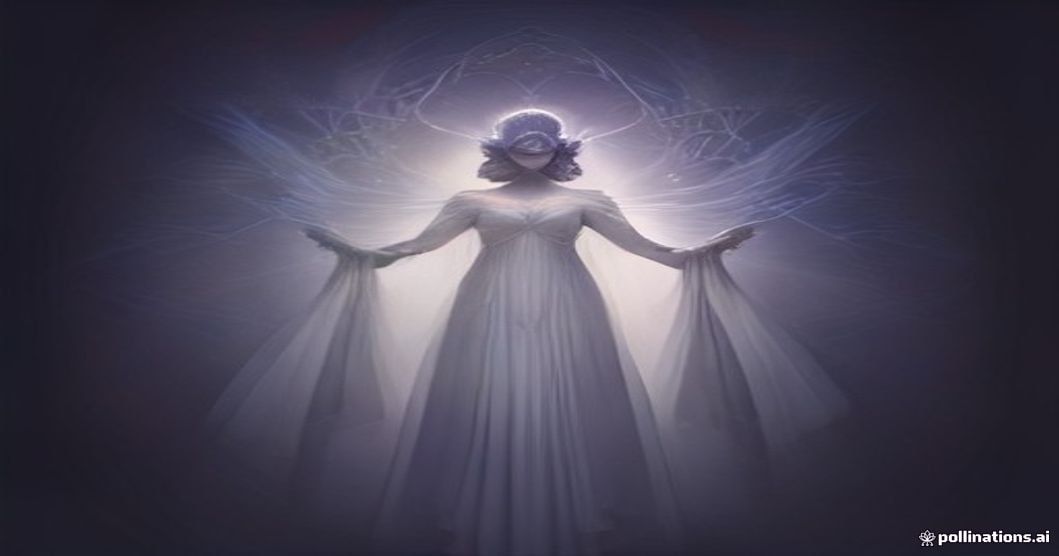

The Weaver of Illusions: Waking from the Grand Play
In the ancient philosophical text known as the Yoga Vasistha, a tale is told of the noble King Trishanku, who desired to ascend to the heavens in his physical body. Unable to find divine approval through traditional rituals, he sought the aid of the sage Vishwamitra, who used his immense spiritual power to launch the king upward. Yet, halfway to the celestial realm, the gods intervened, rejecting a physical mortal in their domain, and hurled him back downward. Mid-air, suspended by Vishwamitra’s opposing force and the gravitational pull of the heavens, Trishanku remained trapped upside down—neither fully in heaven nor on earth—generating a miniature universe of his own fears and desires.
Trishanku’s predicament is a profound metaphor for the human condition. We spend our lives suspended between our grandest ambitions and our base realities, caught in an invisible web of our own making. The Yoga Vasistha posits that the world we perceive is much like Trishanku’s suspended state: a projection of the mind, a dream woven by our persistent attachments, identifications, and unexamined longings. We mistake the fleeting phenomena of our daily lives for ultimate reality, suffering deeply for things that are as insubstantial as shadows cast on a wall.
The Application to Modern Life
In contemporary existence, we often find ourselves acting like Trishanku, suspended between the heaven of our endless digital aspirations and the earth of our immediate, present-moment responsibilities. We construct elaborate identities through our careers, status, and possessions, investing these constructs with absolute reality. When these fragile identities are threatened, our suffering is acute—not because the external situation is inherently catastrophic, but because we are deeply identified with the illusion.
Awakening from this state does not require abandoning modern life or retreating to a cave. Rather, it demands a shift in perception. When anxiety, frustration, or obsessive desire arises, pause and apply the wisdom of the Yoga Vasistha: view the situation not as a solid, inescapable trap, but as a passing mental construct. By recognizing that much of our stress is self-generated through rigid attachments, we loosen the grip of the illusion. We begin to navigate life with lightness and grace, fully engaged in the world yet fundamentally free from its psychological gravity.
