The Sieve of Desire: Socrates’ Lesson on the Full Life
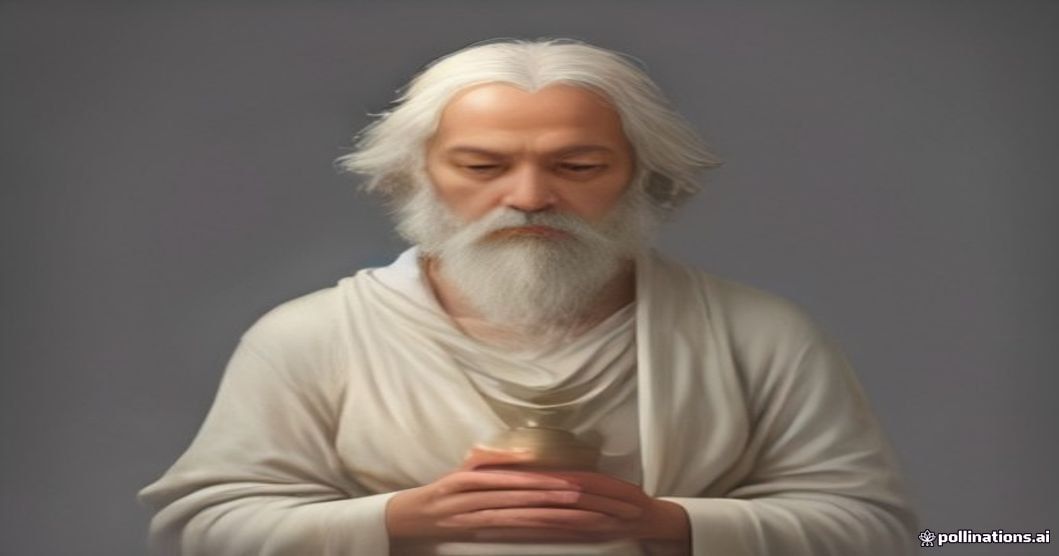

In the classical dialogue Gorgias, Socrates presents a vivid and unsettling metaphor to describe the nature of human desire. He asks his audience to imagine two men, each responsible for maintaining a set of jars.
The first man’s jars are sound and sturdy. He fills them with wine, honey, and milk—precious resources that are difficult to procure—and once they are full, he is at rest. He no longer needs to worry about them; he can turn his attention to his friends, his studies, and the cultivation of his mind.
The second man also has jars, but his are cracked and leaky. Because they cannot hold their contents, he is condemned to a life of perpetual, exhausting labor. He must spend every waking hour frantically pouring more into the vessels just to keep them from becoming empty. If he stops for even a moment, he suffers the ‘terrible pains’ of lack. Socrates argues that the second man represents the ‘hedonistic’ life—a life spent chasing the next pleasure, the next acquisition, or the next victory.
The Modern Sieve
This ancient image is a perfect diagnosis of the ‘hedonic treadmill’ that defines much of modern existence. We often believe that our dissatisfaction is a problem of supply—that we simply haven’t poured enough into our lives. We tell ourselves that if we just had a higher salary, a more attractive partner, or more digital influence, we would finally feel ‘full.’
However, Socrates suggests that for many of us, the problem is not the supply, but the vessel. In a world of infinite scrolling and targeted advertising, our ‘jars’ are intentionally kept leaky. We are conditioned to experience a brief ‘hit’ of satisfaction that drains away almost instantly, leaving us in a state of artificial scarcity. This leads to ‘frantic refilling’—the burnout, anxiety, and relentless busyness that characterize the 21st century.
Mending the Vessel
The wisdom of this parable lies in shifting our focus from the pour to the integrity of the jar. True contentment is not found in increasing the volume of our acquisitions, but in ‘mending’ the cracks in our own character.
To apply this today, we must practice the art of ‘limit.’ This involves identifying the ‘leaks’ in our lives—those areas where we seek external validation to fill an internal void. By practicing gratitude and voluntary simplicity, we begin to seal the cracks. When we stop the leak, we discover the paradox of the full vessel: that we already possess enough to be at peace, provided we stop letting our peace drain away into the bottomless pit of ‘more.’ Freedom is not the power to fill every desire, but the sovereignty to no longer be enslaved by them.
