The Turtle and the Drifting Ring: Awakening to the Rarity of Being

In the quiet glades of Jeta’s Grove near the ancient city of Savatthi, the Buddha once challenged his disciples to imagine a scenario of cosmic proportions.
“Suppose,” he began, “that this entire earth were covered by a single, fathomless ocean, windswept and dark. And suppose there was a wooden yoke—a simple beam with a single hole carved through its center—cast upon the water. The east wind drives it west, the west wind drives it east; the north wind drives it south, and the south wind drives it north, tossing it ceaselessly across the churning expanse.”
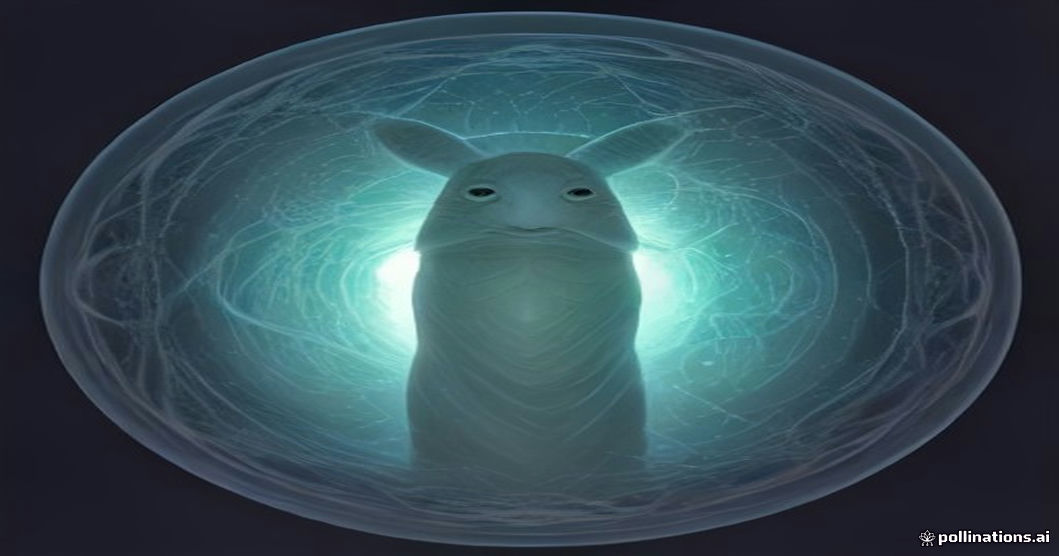
He continued: “Now imagine that deep within the cold, black floor of that ocean dwells a solitary turtle. This turtle is completely blind, and once every hundred years, it swims up from the abyss to break the surface of the water for a single breath of air. What are the chances that this blind turtle, surfacing once a century, would happen to poke its head precisely through the opening of that wandering yoke?”
The monk Ananda responded in awe, noting that such an occurrence would be an unimaginable stroke of chance, bordering on the impossible. Yet, the Buddha replied that across vast, cyclical eons of time, the blind turtle might indeed, by sheer happenstance, find its neck inside that drifting ring. Far rarer than that, he taught, is the attainment of conscious human birth.
In the Chiggala Sutta, this haunting thought experiment was not offered as an exercise in mathematical probability or existential guilt, but as a lightning strike to the sleeping soul. It was designed to shatter the fundamental illusion that life is an abundant, cheap commodity to be casually squandered.
Most modern days are lived in the fog of habitual numbness. We wake, look at glowing screens, nurse petty resentments, perform automated duties, and complain about minor inconveniences as though our existence were a permanent, guaranteed fixture. We treat our lives like an infinite rehearsal, postponing depth, courage, and presence until some idealized tomorrow. In doing so, we suffer from what the ancients recognized as the deepest spiritual blindness: taking consciousness for granted.
From the viewpoint of modern astrophysics and evolutionary biology, the Buddha’s ancient ocean metaphor is astonishingly prescient. Consider the unfathomable chain of contingencies required for you to read these words: the precise calibration of fundamental physical forces after the Big Bang, the catastrophic collisions that formed our planet, the delicate emergence of self-replicating cells, and millions of years of evolutionary struggle against extinction. Out of billions of years of silent, unfeeling matter, the cosmos has organized itself into a creature endowed with a nervous system capable of contemplating its own existence, discerning truth from falsehood, and choosing compassion over brute instinct.
You are, quite literally, the blind turtle breaking the surface of the dark ocean.
To absorb the wisdom of the drifting yoke is to fundamentally alter your relationship with the present moment. It instantly dismantles the habit of trivializing our days. When an annoying delay occurs, when plans fall apart, or when life feels repetitive, the parable asks: Why squander this rare glimpse of light on irritation? The sheer fact that you possess a conscious mind capable of experiencing anything at all is a cosmic miracle.
Living with this realization demands two shifts in our daily life. The first is reverence of attention. If conscious human life is an astronomical rarity, then our attention is the most sacred currency we possess. To surrender it mindlessly to algorithmic feeds, shallow outrage, and reflexive consumption is to cast a diamond into a bottomless well.
The second is moral agency. Many ancient traditions observed that while lower forms of life operate strictly on necessity and survival, the human estate uniquely possesses moral choice—the ability to act against blind impulse in service of kindness, justice, and self-realization. We have the rare opportunity to elevate our existence above mere instinct.
Once every hundred years, the turtle rises from the dark deep to draw a breath. For a fleeting span of time, you are standing under the open sky. Do not waste the breath.
