The Bookkeeper of Heaven: Bodhidharma and the Trap of Spiritual Merit
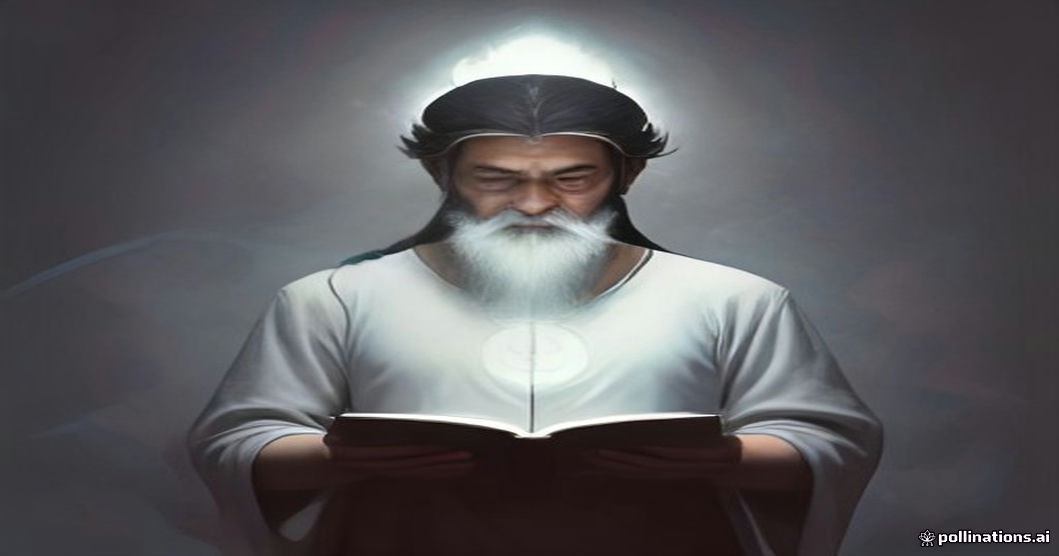

In the early sixth century, Emperor Wu of the Liang dynasty was widely revered as one of the greatest champions of the Buddhist faith in all of China. He had poured vast imperial fortunes into erecting resplendent monasteries, commissioning master artisans to cast towering bronze statues, and personally financing the ordination of thousands of monks. By every external metric of the age, he was a sovereign saint.
When news reached the court that Bodhidharma—the bearded, piercing-eyed sage from India credited with bringing the dhyana teachings eastward—had arrived in China, the Emperor eagerly summoned him to the imperial palace in Nanjing. Anticipating a sublime encounter of mutual reverence, Emperor Wu received the master in his grand audience chamber.
Unable to restrain his pride, the Emperor laid his spiritual portfolio before the sage. “Since my ascension to the throne,” the sovereign proclaimed, “I have built countless temples, copied sacred scriptures, and sustained innumerable monks. Tell me, Master: how much karmic merit have I accumulated?”
Bodhidharma looked at the emperor with indifferent eyes and delivered a single, devastating reply:
“No merit whatsoever.”
Stunned and offended, his entire worldview momentarily unseated, Emperor Wu demanded an explanation. “Why is there no merit?”
Bodhidharma replied, “These are but insignificant effects of the mundane world, the cause of rebirth in transient heavens. They are like shadows following forms—appearing to have substance, yet ultimately empty. True merit is pure wisdom, wondrous and solitary, its essence empty and still. Such merit cannot be sought with worldly ambition.”
Shaken and seeking some bedrock of certainty, the Emperor challenged him once more: “What, then, is the highest principle of holy truth?”
Bodhidharma answered plainly: “Vast emptiness; nothing holy.”
Desperate to regain control of an audience spiraling beyond his comprehension, Emperor Wu demanded, “Who, then, stands before me?”
“I do not know,” the master whispered, before turning on his heel and walking out of the palace, leaving the ruler of China in stunned silence.
The Shadow of the Ledger
The encounter between Emperor Wu and Bodhidharma remains one of the sharpest daggers in the treasury of Zen philosophy. It cuts directly to the marrow of a psychological paradox that haunts humanity across centuries: the moment goodness becomes an investment, it ceases to be good.
Emperor Wu had not become a patron of Dharma out of pure, uncalculating compassion; he had merely upgraded the nature of his greed. Where he had once pursued territory, silks, and political dominance, he was now accumulating spiritual capital. He had turned holiness into a private hedge fund, imagining a celestial bookkeeper stamping his karmic ledger with approval.
Bodhidharma’s radical declaration—“No merit whatsoever”—was not a dismissal of kindness or charity. It was a refusal to validate the subtle vanity that colonizes our best intentions. When an act of generosity is weighed down by the invisible hope of recognition, karmic reward, or even a smug sense of moral superiority, it is merely the ego donning monastic robes. The ego remains at the center of the universe, calculating its profits.
When Bodhidharma spoke of “vast emptiness; nothing holy,” he was pointing to reality as it actually is: unconditioned, uncommodifiable, and unconcerned with human bartering. True virtue arises naturally, like a spring bubbling from the earth or an apple tree bearing fruit. The tree does not keep an invoice for the wanderer who eats from its bough; it simply expresses its nature.
The Modern Balance Sheet
In our contemporary lives, Emperor Wu’s instinct has not vanished—it has simply shifted mediums. We inhabit a culture designed to convert every private virtue into public collateral.
We see it in the frictionless architecture of modern virtue signaling, where compassionate stances are broadcast primarily to harvest social currency. We see it in the subtle vanity of modern self-improvement: tracking our meditation streaks on apps to confirm that we are “better” than yesterday, curating our eco-conscious purchases for peer approval, or secretly resenting a friend when an act of quiet service goes unacknowledged.
Even our psychological well-being is often approached as a commercial transaction. We tell ourselves: I have meditated for thirty days, why is my anxiety not gone? I have forgiven this person, why has the universe not rewarded my peace?
This is Emperor Wu standing before Bodhidharma, asking for his receipt.
Living Without an Invoice
To internalize Bodhidharma’s lesson is to cultivate what the German mystic Meister Eckhart called living without a “why”—acting not for the sake of an anticipated payoff, but because virtue is its own complete fulfillment.
To give to someone in need without rehearsing the story of your generosity to a third party. To practice silence not to achieve the status of a “mindful person,” but simply to be awake to this fleeting breath. To do the right thing when there is zero possibility of praise, metric gain, or cosmic reimbursement.
When you abandon the bookkeeper’s pen, you will discover that genuine liberation does not lie in securing a high seat in heaven or a flawless moral profile on earth. It is found in that vast, open emptiness where the need to prove yourself finally dissolves—and where love is allowed to happen without keeping score.
