The Architecture of Safety: A Deep Dive into the Anthropic Claude Model Series
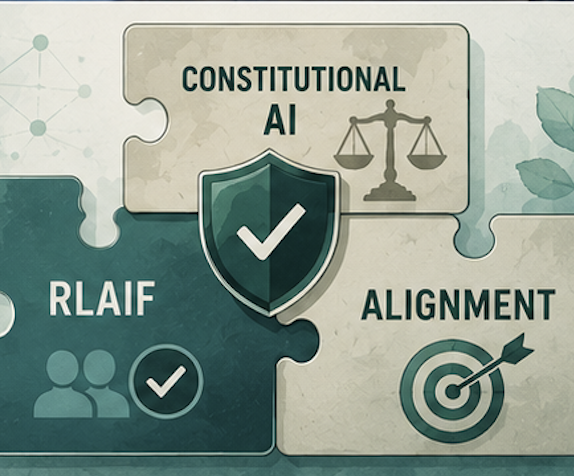

In the rapidly accelerating race for Artificial General Intelligence (AGI), the dominant narrative often centers on raw compute and parameter counts. However, Anthropic, an AI safety and research company founded by former OpenAI executives, has carved out a distinct identity by prioritizing a different metric: alignment. Since its inception, Anthropic has positioned itself not just as a builder of large language models (LLMs), but as an architect of safe, steerable, and reliable systems.
The Claude series represents the culmination of this safety-first philosophy. While other models have occasionally struggled with “hallucinations” or unpredictable behavior under pressure, Claude was designed from the ground up to be “Helpful, Honest, and Harmless” (HHH). This isn’t just a marketing slogan; it is a technical constraint baked into the very weights of the model through a process known as Constitutional AI. As we move from the experimental phase of LLMs into production-ready enterprise applications, understanding the underlying architecture of the Claude series becomes essential for any engineer or researcher looking to build robust AI-driven software.
The Core Engine: Constitutional AI and RLAIF
To understand Claude, one must first understand how it differs from the standard Reinforcement Learning from Human Feedback (RLHF) pipeline used by most industry peers. While RLHF is effective at aligning models with human preferences, it is inherently limited by the scale and consistency of human labelers. Humans are expensive, slow, and—most importantly—inconsistent in their ethical judgments.
Anthropic’s solution is Constitutional AI (CAI). This approach replaces the bulk of human intervention with a “Constitution”—a written set of principles that the model must follow.
The Two-Stage Training Process
The training of a Claude model happens in two distinct phases:
- Supervised Learning (Critique and Revision): The initial model is asked to generate responses to various prompts. It is then asked to critique its own responses based on the principles in its Constitution and revise them. For example, if a model generates a response that is subtly biased, the “critique” step identifies the bias according to the Constitution, and the “revision” step rewrites the response to be neutral. This creates a high-quality dataset of self-corrected examples.
- Reinforcement Learning from AI Feedback (RLAIF): Instead of using humans to rank outputs, Anthropic uses a separate “preference model” trained on the Constitution to evaluate which responses are better. This allows the model to undergo reinforcement learning at a scale that human labeling could never match.
By using RLAIF, Anthropic bridges the gap between raw pre-training and the fine-tuned behavior required for safe interaction. This process is built upon the foundational Transformer architecture, but the alignment layer ensures that the model’s high-dimensional probability space is constrained by ethical guardrails.
“Constitutional AI allows us to scale safety as effectively as we scale performance. By encoding our values into a readable document rather than an opaque set of human labels, we make the model’s ‘intent’ more transparent and easier to debug.” — General sentiment from Anthropic research papers.
This methodology significantly reduces the “reward hacking” often seen in standard RLHF implementations, where models learn to please human labelers by sounding confident even when they are wrong.
The Claude 3 Family: Opus, Sonnet, and Haiku
In early 2024, Anthropic released the Claude 3 family, marking a significant milestone in their ability to compete on raw performance while maintaining their safety standards. The family is divided into three distinct tiers, each optimized for a specific balance of intelligence, speed, and cost.
Claude 3 Opus: The Reasoning Flagship
Opus is the most capable model in the lineup. It was designed to handle complex, open-ended problems that require deep logical reasoning and a high degree of nuance. In technical benchmarks, Opus demonstrated parity with—and in some cases, superiority over—GPT-4. It excels in:
- High-level strategic analysis
- Complex coding and architectural design
- Scientific research and data synthesis
Claude 3 Sonnet: The Enterprise Workhorse
Sonnet was designed to be the “sweet spot” for business applications. It is significantly faster than Opus and more cost-effective, yet it maintains a level of intelligence that surpasses the previous generation (Claude 2.1). It is the primary model used for scaled tasks like:
- Data processing and RAG (Retrieval-Augmented Generation)
- Marketing automation
- Code generation for standard web applications
Claude 3 Haiku: Near-Instant Responsiveness
Haiku is optimized for speed and efficiency. It is one of the fastest models in its intelligence class, capable of reading a dense research paper with charts and graphs in under three seconds. Its primary use cases include:
- Customer support chatbots
- Content moderation
- High-volume categorization tasks
Comparative Benchmarks
| Benchmark | Claude 3 Opus | Claude 3 Sonnet | Claude 3 Haiku | GPT-4 (Reported) |
|---|---|---|---|---|
| MMLU (Undergrad level) | 86.8% | 79.0% | 75.2% | 86.4% |
| GPQA (Expert reasoning) | 50.4% | 40.4% | 33.3% | 35.7% |
| HumanEval (Coding) | 84.9% | 73.0% | 75.9% | 67.0% |
| GSM8K (Math) | 95.0% | 92.3% | 88.9% | 92.0% |
These benchmarks highlights that while Opus is the “brain,” even the smaller models like Haiku punch well above their weight in coding and mathematical reasoning.
The 3.5 Evolution: Setting New Industry Standards
The release of Claude 3.5 Sonnet in mid-2024 represented a paradigm shift in how model “versions” are perceived. Traditionally, a “point release” implies incremental improvement. However, 3.5 Sonnet outperformed the previous flagship, Claude 3 Opus, across almost every metric while operating at the speed and price point of a mid-tier model.
Key Architectural Improvements in 3.5
One of the most notable leaps in the 3.5 series is its vision capability. Claude 3.5 Sonnet can accurately interpret complex charts, transcribe handwritten text, and even understand the spatial relationship between objects in an image. This makes it a powerful tool for visual data extraction—a task that previously required specialized OCR and computer vision models.
Furthermore, 3.5 Sonnet introduced “Artifacts,” a UI-driven feature that allows the model to render code, documents, and websites in a side-by-side window. This integration signifies Anthropic’s move toward “agentic” workflows, where the model isn’t just generating text but is actively collaborating on a workspace.
For developers, the improvement in nuance detection is perhaps the most critical. 3.5 Sonnet is significantly better at following complex, multi-step instructions and maintaining a consistent “persona” without drifting into generic AI-speak. This is a direct result of refined Constitutional AI training, which allows the model to be more flexible in its tone while remaining within safety bounds.
Safety Frameworks and Model Alignment
A recurring critique of highly aligned models is the “refusal rate” problem. Early versions of Claude were sometimes seen as overly cautious, refusing to answer benign prompts because they were interpreted as potentially harmful. Anthropic has spent considerable engineering resources on “calibration”—the fine art of ensuring the model says “no” to a jailbreak attempt but “yes” to a legitimate request for a dark comedy script or a historical analysis of war.
Transparency and System Cards
Anthropic leads the industry in transparency by publishing detailed System Cards. These documents outline the model’s limitations, its performance on AI safety benchmarks, and the specific “red-teaming” methodologies used during development.
Red-teaming involves hiring experts to deliberately try and break the model’s safety filters. For the Claude 3 family, Anthropic conducted extensive testing on:
- Cybersecurity: Ensuring the model doesn’t assist in creating malware or identifying zero-day vulnerabilities.
- Biological Risks: Preventing the model from providing instructions on how to synthesize dangerous pathogens.
- Bias and Fairness: Testing the model’s outputs across various demographic groups to ensure equitable performance.
The Role of the Constitution in Preventing Drift
Model drift—where a model’s performance degrades or its behavior changes unexpectedly after fine-tuning—is a major concern for enterprise deployments. Because Claude is grounded in a stable “Constitution,” the core alignment remains consistent even as the model is updated. This provides a level of predictability that is essential for industries like finance and healthcare, where regulatory compliance is non-negotiable.
Implementation Best Practices for Developers
Integrating Claude into a production stack requires a shift in how developers approach prompting and context management. Anthropic’s models are particularly sensitive to structure, and following a few best practices can significantly improve output quality.
1. Use XML Tags for Structure
Claude is trained to recognize and respect XML-style tags. This is the most effective way to separate instructions from data.
import anthropic

client = anthropic.Anthropic(api_key="your_api_key")

response = client.messages.create(
    model="claude-3-5-sonnet-20240620",
    max_tokens=1024,
    system="You are a senior data analyst.",
    messages=[
        {
            "role": "user",
            "content": """
            Here is a dataset in CSV format:
            <dataset>
            id,name,revenue
            1,Alpha,100
            2,Beta,200
            </dataset>

            Please perform the following task:
            <task>
            Summarize the total revenue and provide a growth forecast.
            </task>
            """
        }
    ]
)
print(response.content)
2. Managing the 200k+ Context Window
The Claude 3 family supports a context window of at least 200,000 tokens, with some versions capable of up to 1 million for specific enterprise partners. However, “more” isn’t always “better.” To maintain high retrieval accuracy (the “needle in a haystack” problem), developers should:
- Place the most important instructions at the bottom of the prompt (Recency Bias).
- Use clear headers to demarcate different documents within the context.
- Avoid including irrelevant “noise” that might distract the model from the core task.
3. Cost-Optimization Strategies
Don’t use Opus for tasks that Haiku can handle. A common pattern is the “Router Pattern”:
- Use Haiku to categorize the incoming user query.
- If the query is a simple FAQ, let Haiku answer it.
- If the query involves complex logic or multi-file code analysis, route it to Sonnet 3.5.
- If the query requires deep strategic synthesis or high-stakes reasoning, route it to Opus.
This approach can reduce API costs by up to 80% without sacrificing the quality of the user experience.
The Future Outlook: Towards Claude 4 and Beyond
The trajectory of the Claude series suggests a future where AI safety and high-end performance are no longer a zero-sum game. As we look toward the potential release of Claude 3.5 Opus and the eventual Claude 4, several trends are emerging.
Scaling Laws and AGI Safety
Anthropic remains a vocal proponent of scaling laws—the idea that more compute and more data lead to predictable increases in intelligence. However, they are also pioneering “Safety-Led Scaling.” This means that as models become more capable of autonomous action, the safety frameworks (the Constitution) must also become more sophisticated. We can expect future models to have “internalized” safety checks that operate at the latent level, rather than just as a post-processing filter.
Multi-modal Integration and Agentic Workflows
The success of the “Artifacts” UI and the vision capabilities of 3.5 Sonnet point toward a future where Claude is not just a chatbot, but an agent. This involves the model being able to use tools (API calling), browse the web securely, and interact with software environments to complete complex tasks autonomously. The challenge for Anthropic will be maintaining their “Harmless” mandate while giving the model the power to execute code and modify data.
The Regulatory Landscape
As governments around the world begin to draft AI legislation, Anthropic’s emphasis on transparency and Constitutional AI puts them in a strong position. Their commitment to sharing system cards and participating in external audits will likely become the blueprint for how AI companies interact with regulatory bodies.
In conclusion, the Claude model series is a testament to the fact that principled engineering can compete with—and often beat—unconstrained scaling. For the developer and the researcher, Claude offers a glimpse into a future where AI is not a “black box” of unpredictable outputs, but a structured, reliable, and deeply capable partner in solving the world’s most complex problems.
