Compromising the Edge: The GL.iNet Cloud Flaw and the Risks of Centralized Hardware Management
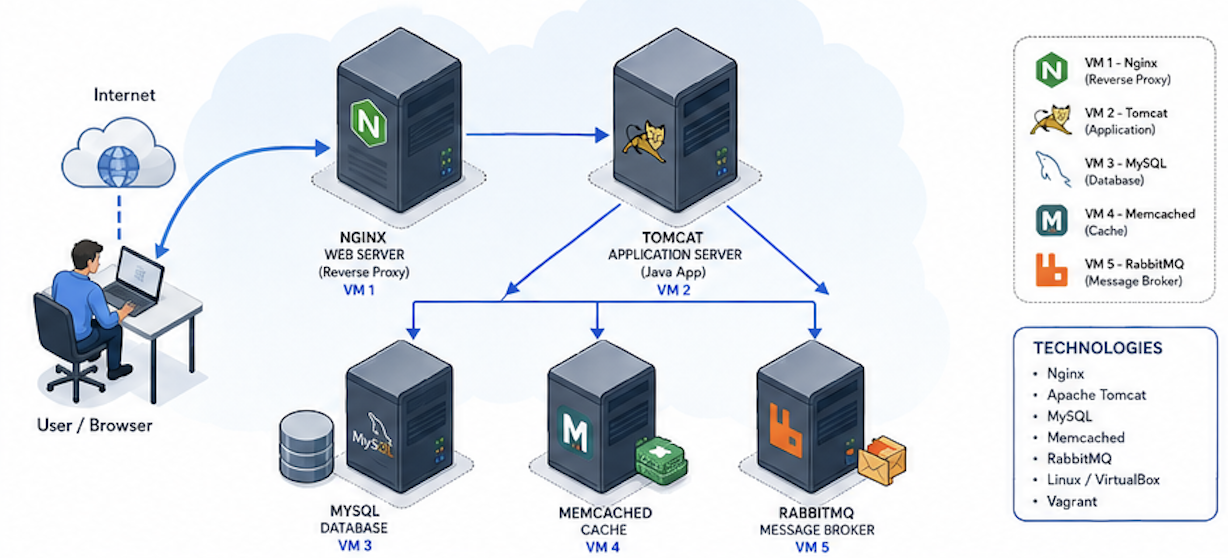

The modern enterprise and power-user landscape is undergoing a quiet, fundamental shift. We have spent the last decade containerizing applications, migrating monoliths to microservices, and obsessing over Kubernetes pod security policies—all while quietly handing the keys to our network perimeter over to convenient, cloud-managed edge hardware. From travel routers sitting in hotel rooms to dedicated KVM (Keyboard, Video, Mouse) over IP devices nestled inside remote server racks, the temptation of zero-touch provisioning and global fleet management has proved irresistible.
However, convenience is a security debt, and the interest on that debt is high.
The recent exploitation of GL.iNet’s cloud management infrastructure serves as a stark wake-up call for edge device security. When threat actors weaponized vulnerabilities within the GL.iNet Cloud platform to push persistent malware directly onto routers and KVM units, they demonstrated a terrifying reality: compromising the control plane means compromising the entire physical perimeter. For DevOps engineers and network administrators, this incident forces a hard look at the risks of centralized hardware management and the unique fragility of the edge.
Anatomy of the Attack: Inside the GL.iNet Cloud Vulnerability
To understand how an attacker moves from a cloud platform to a physical piece of silicon on your desk, we need to examine the architecture of modern cloud-managed hardware. Centralized management platforms rely on a persistent, bidirectional communication channel between the edge device and the vendor’s cloud service. This channel handles remote monitoring, telemetry, configuration pushes, and firmware updates.
+--------------------------+          Encrypted / TLS          +---------------------------+
|    GL.iNet Cloud         | <------------------------------>  |     Edge Router / KVM     |
|    Management Platform   |     (Telemetry / Config Push)     |     (Embedded Linux)      |
+--------------------------+                                   +---------------------------+
              ^                                                             ^
              | [COMPROMISED VECTORS]                                       | [PERSISTENT PAYLOADS]
              v                                                             v
+-----------------------------------------------------------------------------------------------+
|                      The Attack Chain: Cloud Infrastructure to Device Root                    |
+-----------------------------------------------------------------------------------------------+
In the case of the GL.iNet incident, threat actors zeroed in on weaknesses within the cloud management service. Instead of attacking thousands of individual routers—a noisy, complex endeavor involving localized firmware exploits—the attackers targeted the single nexus point that all those routers trusted blindly: the cloud controller.
Once the centralized infrastructure was compromised, the trust relationship between the cloud platform and the edge devices became a weapon. Because edge routers and KVM units are architecturally designed to accept configuration updates, telemetry scripts, and management commands originating from the cloud, the attackers could issue malicious commands masquerading as routine maintenance.
This mirrors broader identity and supply chain challenges we see across the modern stack. Just as an attacker might exploit centralized access controls to bypass traditional perimeters—similar to concerns highlighted in discussions around Okta’s acquisition of Permiso for identity governance and AI—compromising a central management console obliterates the security boundaries of every downstream asset. The cloud management portal stopped being an administrative tool and transformed into a persistent delivery vehicle for malicious payloads.
Targeting the Edge: Routers and KVM Devices Under Siege
Once an adversary gains administrative execution via a cloud compromise, the next challenge is persistence. Embedded Linux firmware environments found on devices like GL.iNet routers are notoriously constrained. They lack the expansive tooling, dynamic debugging suites, and heavy endpoint detection and response (EDR) agents we deploy on standard cloud VMs or bare-metal servers.
This constrained nature makes these devices prime targets for persistent malware. The threat actors specifically targeted two classes of hardware:
- Embedded Linux Routers: Devices that manage network traffic, NAT, routing tables, and VPN tunnels.
- KVM over IP Units: Devices that provide out-of-band keyboard, video, and mouse control to host servers, effectively offering raw, pre-boot access to bare-metal infrastructure.
| Feature / Metric | Traditional Cloud VM / Server | Edge Router / KVM Device |
|---|---|---|
| Operating System | Full Linux distribution (Ubuntu, RHEL, etc.) | Stripped-down embedded Linux (OpenWrt-based, BusyBox) |
| Storage & Persistence | Non-volatile flash, disk persistence, modular filesystems | Read-only SquashFS with overlay, limited flash storage |
| Security Tooling | Heavy EDR agents, SIEM forwarders, SELinux/AppArmor | Minimal logging, absence of traditional security agents |
| Management Plane | SSH, APIs, Infrastructure-as-Code pipelines | Vendor cloud portals, proprietary management daemons |
Installing malware on these constrained systems requires surgical precision. Attackers typically modify startup scripts, inject malicious binaries into writable overlay filesystems, or hook into the device’s init systems. Because these devices often lack secure boot enforcement or cryptographic validation of runtime modifications, the malware can survive reboots, firmware flashes (if not properly wiped), and standard configuration resets.
The targeting of KVM devices is particularly insidious. A compromised KVM unit is not just a breached network node; it is an absolute bypass of operating system-level security. An attacker with control over a KVM-over-IP device can interact with the host machine at the BIOS level, deploy payloads during boot sequences, or capture sensitive administrative keystrokes before encryption layers take hold.
The Ripple Effect: Blast Radius and Lateral Movement
An edge device compromise is rarely isolated to the device itself. Routers and KVM units occupy strategic real estate in any network topology: they sit directly at the boundary between the untrusted public internet and the trusted internal network, or they possess direct, out-of-band paths into server management planes.
When threat actors installed persistent malware on GL.iNet hardware via the cloud flaw, the blast radius expanded immediately:
- High-Value Pivot Points: Edge routers act as ideal jumping-off points for lateral movement. From the inside of the network boundary, attackers can scan internal subnets, discover internal services, and launch credential-harvesting attacks.
- Traffic Interception and MitM: With root access to a routing device, adversaries can silently intercept, inspect, or modify network traffic traversing the gateway. This enables credential sniffing, DNS hijacking, and session token theft without triggering alerts on internal hosts.
- Long-Term Espionage: Because embedded routers are rarely audited by traditional file-integrity monitoring (FIM) tools, a persistent implant can remain hidden for months or years, serving as a quiet, reliable backdoor into corporate or home-office networks.
This cascading risk profile highlights why modern infrastructure governance cannot rely on blind trust in vendor-supplied management layers. Just as developers use tools like Terraform and HCL-native policies for strict cloud governance to ensure infrastructure changes adhere to defined compliance guardrails, network administrators need rigorous policy enforcement and visibility over their physical and cloud-connected assets. Without automated configuration validation and drift detection, a compromise at the management layer propagates instantly down to the metal.
Hardening the Edge: Best Practices for Securing Cloud-Connected Hardware
Securing cloud-connected edge hardware requires shifting away from the assumption that vendor cloud platforms are infallible. Convenience must be balanced with defense-in-depth principles. Here is how network administrators and DevOps engineers can harden their edge deployments against cloud-mediated supply chain attacks:
1. Adopt Zero-Trust Principles for Remote Management Planes
Never assume that traffic originating from a vendor’s cloud management platform is inherently safe.
- Restrict outbound firewall rules from edge devices to only explicitly required IP ranges and ports.
- Disable cloud management features entirely if they are not actively required for day-to-day operations. If a router can be managed via local SSH or a wired serial interface, eliminate the cloud dependency.
2. Enforce Hardware-Backed Authentication and Firmware Verification
- Ensure that devices support and enforce Secure Boot or verified boot chains, ensuring that firmware images are cryptographically signed by trusted keys before execution.
- Avoid using default administrative credentials or shared API keys across your device fleet. Implement robust, unique cryptographic identities (such as mutual TLS certificates) for every single edge node.
3. Implement Strict Network Segmentation and Monitoring
- Isolate edge routers and KVM units onto dedicated management VLANs. A compromised router should not have uninhibited layer-2 access to critical server segments.
- Deploy network-based intrusion detection systems (NIDS) to monitor outbound telemetry and DNS requests from edge hardware. Unexplained beaconing to vendor cloud endpoints or unknown external IPs should trigger immediate isolation.
4. Minimize External Cloud Dependencies
Evaluate whether your operational model actually requires cloud-managed edge hardware. For high-security environments, prefer locally managed appliances configured via declarative, version-controlled scripts rather than continuous cloud synchronization.
Future Outlook: The Evolution of Edge and Cloud Supply Chain Security
The GL.iNet cloud exploitation incident is part of a broader, troubling trend: as perimeter defenses harden, threat actors are increasingly shifting their focus upstream toward the software supply chain and centralized management infrastructure. Compromising one cloud dashboard is infinitely more efficient than attacking ten thousand individual routers one by one.
Looking ahead, this incident will inevitably accelerate several major shifts in edge device and IoT security:
- Increased Regulatory and User Scrutiny: Manufacturers of routers, switches, and KVM units will face intense pressure to open their cloud architectures to rigorous third-party security audits and penetration testing. The days of treating embedded device companion clouds as closed, opaque black boxes are coming to an end.
- The Push for Verifiable Build Pipelines: Enterprises will demand greater transparency from hardware vendors, pushing toward reproducible builds, verifiable firmware supply chains, and cryptographic proof that management platforms cannot be abused to push arbitrary payloads.
- The Sovereignty vs. Convenience Tradeoff: Just as data privacy debates—such as Apple’s ongoing battles with the UK government over iCloud end-to-end encryption—highlight the tension between user security and remote access capabilities, administrators must grapple with how much administrative control they are willing to surrender to third-party clouds in exchange for convenience.
Ultimately, the lesson of the GL.iNet cloud flaw is simple: convenience must never outpace verification. In an era where the edge is continuously targeted, treating cloud-managed hardware with the same zero-trust skepticism we apply to public cloud infrastructure is no longer optional—it is the baseline requirement for operational survival.
