The Rise of Sovereign AI: Inside Firebird’s 300MW NVIDIA Blackwell Factory in Armenia
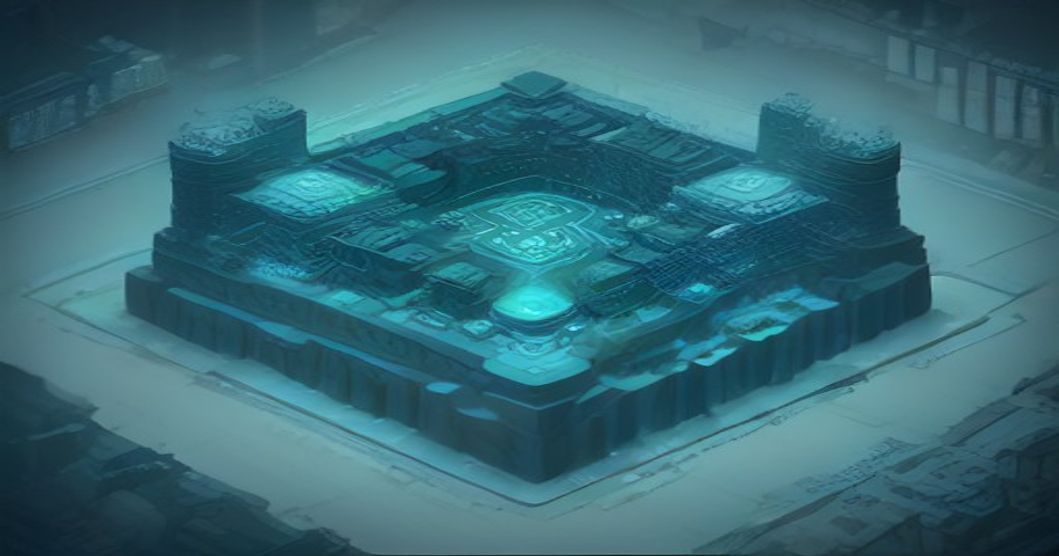

The transition from general-purpose cloud computing to specialized “AI Factories” is no longer a theoretical roadmap—it is a physical reality currently being constructed in the South Caucasus. Firebird’s announcement of a 300-megawatt (MW) AI factory in Armenia, powered by NVIDIA’s Blackwell architecture, marks a pivotal moment in the democratization of high-performance computing (HPC). For years, the narrative of artificial intelligence has been dominated by a handful of hyperscalers in Northern Virginia, Dublin, and Singapore. However, the Firebird project signals the rise of “Sovereign AI,” a movement where nations and regional players reclaim control over their data, their cultural nuances, and their computational destiny.
At its core, the Firebird facility is not a traditional data center. While a standard data center is designed to host a variety of applications—from web servers to databases—an AI Factory is a singular, massive instrument designed for one purpose: the production of intelligence. By deploying 300MW of capacity, Firebird is positioning Armenia as a central hub for the Commonwealth of Independent States (CIS) region. This move addresses a critical gap in the global tech landscape, as the tech industry moves towards efficient AI models that require specialized, localized hardware rather than generic cloud instances.
The significance of this deployment lies in its scale and its timing. As global demand for AI compute outstrips supply, the ability to provide localized, high-density infrastructure becomes a strategic advantage. Firebird isn’t just renting out rack space; it is providing the foundation for frontier models that can understand local languages and navigate regional regulatory frameworks without the latency or “digital colonialism” often associated with centralized US-based platforms.
The Blackwell Architecture: Powering Frontier Models
The engine room of the Firebird facility is built upon the NVIDIA Blackwell platform, a generational leap in GPU architecture specifically designed to handle the trillion-parameter scale of modern Large Language Models (LLMs). Unlike the previous Hopper architecture, Blackwell was engineered with the “AI Factory” concept in mind, focusing on interconnectivity and energy efficiency at the rack level.
NVIDIA Blackwell GPUs: A Performance Leap
The Blackwell GPUs (such as the B200) feature 208 billion transistors and are manufactured using a custom 4NP TSMC process. For the Firebird facility, the primary draw is the massive increase in inference and training performance. Blackwell introduces a second-generation Transformer Engine that supports new 4-bit floating point (FP4) precision. This allows for twice the compute and bandwidth of previous generations while maintaining the high accuracy required for frontier AI models.
| Feature | NVIDIA Hopper (H100) | NVIDIA Blackwell (B200) |
|---|---|---|
| Transistor Count | 80 Billion | 208 Billion |
| FP8 Training | 4 PFLOPS | 10 PFLOPS |
| FP4 Inference | N/A | 20 PFLOPS |
| NVLink Bandwidth | 900 GB/s | 1.8 TB/s |
| HBM3e Memory | 80 GB | 192 GB |
The Role of NVIDIA DSX and Dell PowerEdge
Firebird utilizes the NVIDIA Data Center Scalable Infrastructure (DSX) platform to orchestrate this massive deployment. DSX is essentially a blueprint that ensures the networking, compute, and storage layers work in total synchronicity. In an environment where thousands of GPUs must act as a single computer, the bottleneck is rarely the individual chip; it is the communication between them.
To provide the enterprise-grade reliability required for 24/7 AI operations, Firebird has integrated Dell PowerEdge servers into the stack. These servers act as the “chassis” for the Blackwell GPUs, providing the robust power delivery and management interfaces that IT architects expect. By combining NVIDIA’s accelerated computing with Dell’s proven server architecture, Firebird creates a stable environment for training the next generation of LLMs.
Thermal Management at Scale: Vertiv and Liquid Cooling
One cannot discuss 300MW of compute without addressing the elephant in the room: heat. Traditional air-cooling methods, which rely on massive fans and chilled air, are fundamentally incapable of cooling the high-density racks found in a Blackwell-based AI factory. A single Blackwell rack can consume over 100kW of power, creating a heat density that would melt standard data center components within seconds if the cooling failed.
Why Air Cooling Fails
Air is an inefficient medium for heat transfer. In a 300MW facility, the sheer volume of air required to move heat away from the GPUs would necessitate an impractical amount of physical space and energy for fans. Furthermore, as the AI-deflationary spiral in IT outsourcing continues to drive the need for cheaper, more efficient compute, the overhead of air cooling becomes a financial liability.
Vertiv Liquid Cooling Systems
To solve this, Firebird partnered with Vertiv to implement advanced liquid cooling solutions. This involves several layers of heat rejection:
- Direct-to-Chip (D2C) Cooling: Cold plates are placed directly atop the Blackwell GPUs. A dielectric fluid or treated water circulates through these plates, absorbing heat at the source.
- Coolant Distribution Units (CDUs): These units manage the flow, pressure, and temperature of the liquid as it moves through the racks.
- Rear Door Heat Exchangers (RDHx): For any residual heat that escapes into the air, liquid-cooled doors on the back of the racks capture the energy before it enters the room.
Schneider Electric and Power Distribution
Supporting this thermal strategy is Schneider Electric’s power distribution infrastructure. In a 300MW setup, the electrical architecture must be as sophisticated as the compute. Schneider provides the medium-voltage switchgear and Uninterruptible Power Supply (UPS) systems designed to handle the “spiky” power loads characteristic of AI training, where power consumption can jump by megawatts in milliseconds as a model begins a new epoch.
Sovereign AI: Data Autonomy in the CIS Region
The Firebird project is perhaps the most prominent example of “Sovereign AI” in the Eastern European and CIS regions. Sovereign AI is the idea that a nation’s data—its language, history, and laws—should be processed on infrastructure that resides within its borders and is subject to its jurisdiction.
Reducing Reliance on Global Hyperscalers
Currently, most AI development in the CIS region relies on APIs from companies like OpenAI or Google, or on cloud instances hosted in Western Europe or the US. This creates several risks:
- Latency: Round-trip times to distant data centers degrade the performance of real-time AI applications.
- Data Residency: Sensitive government or corporate data must often cross international borders, complicating compliance with local privacy laws.
- Cultural Bias: Models trained primarily on Western datasets often lack the nuance required for local languages like Armenian, Kazakh, or Uzbek.
By building a 300MW factory in Armenia, Firebird allows regional developers to train models on local datasets. This ensures that the resulting AI “understands” the cultural and linguistic context of the region, which is essential for everything from legal tech to localized customer service bots.
Security and Strategic Independence
Sovereignty also provides a buffer against geopolitical shifts. By owning the physical infrastructure, the region is less vulnerable to sudden changes in service terms or international sanctions that could throttle access to centralized AI platforms. This is a critical component of the DeepSeek strategy of engineering around compute constraints, where localized optimization becomes a survival trait for regional tech ecosystems.
Case Study: Perplexity AI and the Agentic Future
A significant early adopter of the Firebird facility is Perplexity AI. Known for its “answer engine” that provides sourced, real-time information, Perplexity is moving toward an “agentic” future—where AI doesn’t just answer questions but performs tasks on behalf of the user.
Localized Compute for AI Agents
For an AI agent to be effective, it needs to interact with local services—booking a flight on a regional carrier, checking local government databases, or interacting with regional e-commerce platforms. Doing this through a data center in Virginia adds unnecessary latency and potential data handling issues.
“By utilizing Firebird’s Blackwell factory, we can bring our agentic platform closer to the user, ensuring that the ‘reasoning’ happens at the edge of the regional network,” a Perplexity engineering lead might argue.
The transition from search engines to proactive AI agents requires massive amounts of inference compute. The Firebird facility provides the high-throughput, low-latency environment necessary for these agents to operate in real-time, effectively serving as the regional “brain” for Perplexity’s expansion into the CIS market.
Infrastructure Constraints and the Power Grid Challenge
Building a 300MW AI factory is not without its macro-level difficulties. The energy requirements of such a facility are equivalent to a small city, placing immense pressure on national infrastructure.
Balancing Growth with Stability
Armenia’s power grid must now accommodate a massive, concentrated load. This presents a delicate balancing act for policymakers. On one hand, the AI factory is a significant economic engine; on the other, it poses a threat to grid stability if not managed correctly.
The challenge lies in the nature of AI workloads. Unlike a factory that runs at a steady state, an AI cluster can have massive fluctuations in power draw. Schneider Electric’s role in providing grid-stabilization technology is vital here, ensuring that the AI data centers and power grid stability remain in equilibrium.
Lessons from Global Constraints
Firebird is entering a market where power is the new currency. In Tier 1 data center markets like Northern Virginia or Frankfurt, new builds are often delayed by years due to grid capacity limits. By choosing Armenia, Firebird is betting on a region where they can secure the necessary power today, rather than waiting in a decade-long queue in Western Europe. However, this requires a deep partnership with the Armenian government to ensure that industrial AI growth does not come at the expense of residential energy security.
Future Outlook: From Blackwell to Rubin and Beyond
The launch of the 300MW facility is only the first phase of Firebird’s roadmap. The company has already signaled its intent to expand its footprint across the CIS region, creating a distributed network of AI factories that can share workloads and provide redundancy.
As NVIDIA moves from the Blackwell architecture to the upcoming “Rubin” platform, Firebird’s modular design—based on the DSX framework—will allow for relatively seamless upgrades. The liquid cooling infrastructure being installed today is designed to be “future-proof,” capable of handling the even higher thermal design points (TDP) expected in the next generation of silicon.
Ultimately, the Firebird project is about more than just GPUs and megawatts. It is a blueprint for how mid-sized nations can participate in the AI revolution. By providing specialized, localized, and sovereign infrastructure, Armenia is positioning itself not just as a consumer of AI, but as a primary manufacturer of it. As the world moves toward a more fragmented and regionalized digital landscape, the “AI Factory” model pioneered by Firebird in Armenia may well become the standard for how the rest of the world builds its future.
